
The Climate Change Committee’s Well Adapted UK Report: implications for Brighton and Hove
The Climate Change Committee’s Well Adapted UK Report: implications for Brighton and Hove
Cathy Shutt
Key points
The Climate Change Committee’s (CCC) 2026 report, A Well-Adapted UK, argues that, given projections of serious global warming and the associated increase in climate hazards and risks, investing in adaptation now offers better value for money than waiting and bearing the costs of climate-related damage.
Brighton & Hove City Council’s Climate and Nature Action Plan (CNAP) is a credible foundation for the kind of adaptation advised by CCC. The Climate and Nature Action Plan demonstrates a strong understanding of the city' s principal climate risks, and details ongoing actions and future plans to address critical risks linked to heat, flooding, water security, nature, infrastructure and community resilience.
However, the city has not yet converted its evidence and portfolio into measurable targets, transparent investment priorities and clearly accountable delivery arrangements in all areas. It is therefore difficult to judge whether action matches the scale of risks, whether its priorities are the right ones - particularly for vulnerable groups - and whether actions are planned as dynamic adaptive pathways, progressing from short-term resilience towards the transformational adaptation that uncertain future conditions may require.
Devolution offers potential opportunities for more strategic planning and investment, but unless managed well may dilute Brighton & Hove’s distinctive needs.
Indicative analysis suggests that Brighton & Hove may require roughly £40 million in annual capital investment for adaptation. BHCC and the Strategic Authority should therefore develop joint investment pathways that consider vulnerability, wellbeing, nature and wider benefits of adaptation investments.
Communities should be engaged through sustained co-production rather than consultation alone.
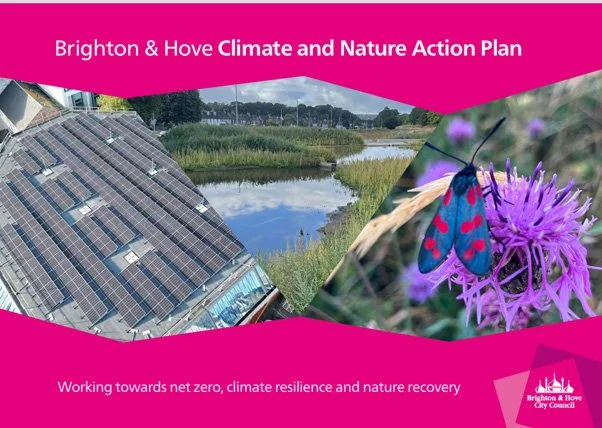
This post is a summary of a longer report (here), that considers the implications of the Climate Change Committee’s (CCC) 2026, A Well-Adapted UK, for Brighton and Hove, including delivery of the City’s Climate and Nature Action Plan. It situates this analysis in the context of devolution, and debates about how to value investment in climate adaptation.
A Well-Adapted UK: an argument for adaptation to be a strategic priority
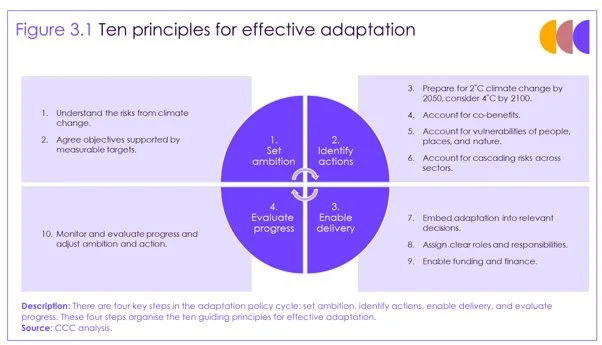
As the Fourth Independent Assessment of UK Climate Risk, A Well-Adapted UK is an important intervention in the debate about national preparedness. Its central message is that climate change is already producing more severe heat, flooding, drought and other hazards. These pose significant risks to transport infrastructure and systems, education, health services, food systems, natural habitats, economic activity and equitable socio economic wellbeing across all four nations of the UK. Adaptation has not kept pace. The CCC report therefore seeks to make adaptation a strategic priority by setting out: eight priority risks and targets; the economic case and public support for investment; evidence-based, cost-effective solutions; the roles of different actors; and an effective adaptation framework of ten principles to be applied across relevant sector delivery systems.
Source A Well-Adapted UK – the Fourth Independent Assessment of UK Climate Risk
Reception: welcome, but is it sufficiently ambitious?
A Well-Adapted UK builds on previous CCC reports (reviewed by Andrew Coleman, Nicky Lumb and Simon Maxwell for Climate:Change). Its argument for investment in adaptation, together with practical evidence about effective solutions, have generally been well received. The report’s significance lies in reframing adaptation, historically overshadowed by mitigation, as a mainstream issue of economic security, public health, infrastructure and government competence. The CCC argues that action is needed at scale and speed, rather than allowing uncertainty to justify delay. Acting now rather than later offers better value for money. It also demonstrates that much action needs to be designed at the local level because of the local specificity of risks.
Critics, such as the Climate Majority Project, nevertheless argue that the report understates the urgency of global warming and the possibility of societal breakdown. This raises a fundamental question about ambition and how we think about resilience. Should resilience be mainly about ‘bouncing back’ to protect existing systems by strengthening absorptive and anticipatory capacity to cope with climate risks? Or should it build adaptive capacity to ‘bounce forward’ and transform the social, economic and environmental conditions that create vulnerability and improve the lives of future generations?
The UK’s slow progress partly reflects weak governmental ownership. It also raises questions, that have been raised elsewhere, about the influence of political cycles that disincentivise investment in adaptation. Whatever the case, ministries and local government authorities have limited capacity to engage with issues related to effective policy for adaptation. During the drought and wildfire risks of August 2026, only 20 DEFRA staff were reportedly working on climate adaptation. DEFRA’s response to A Well-Adapted UK - planning for at least 2°C of warming by 2050, strengthening the evidence base and developing measurable objectives - is important. However, it also demonstrates how much more remains to be done.
A Well-Adapted UK: a changing climate and increasing risks
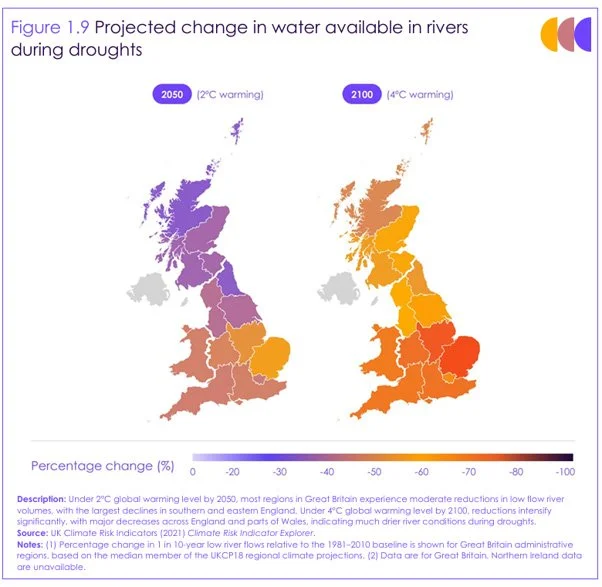
The UK is already experiencing significant change: its ten warmest recorded years have occurred since 2000, and temperatures exceeded 40°C for the first time in 2022. Heatwaves are becoming hotter, longer and more frequent; intense rainfall is increasing flood risk; drought and water stress are worsening; and sea levels continue to rise. This is reinforced by the State of the Climate Report, reviewed by Simon Maxwell in July 2026 and predicted to get worse.
Source: A Well-Adapted UK – the Fourth Independent Assessment of UK Climate Risk
Global warming is likely to reach about 1.5°C above pre-industrial levels around 2030, approximately 2°C by 2050 and close to 3°C by 2100 on current trends; more than 4°C remains possible under less favourable pathways. Risks increase sharply with warming, and at higher levels some become deeply uncertain, making conventional forecasting and investment appraisal less reliable.
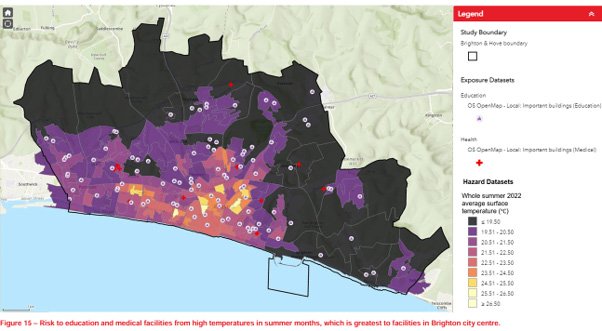
For Brighton & Hove, the implications are substantial. The city faces significant risks from extreme heat, surface water and groundwater flooding, coastal change, water stress, ecosystem degradation and disruption to infrastructure and services.
Source: Brighton and Hove City Council Climate Risk and Vulnerability Assessment and Action Plan
More than 46,000 people are estimated to be at risk from flooding, together with 9.2 km of A roads, 8 km of railway and 107 listed buildings. High temperatures already pose risks to health and wellbeing, agriculture, biodiversity, transport, buildings and service delivery. These risks are expected to intensify as the climate changes.
Climate risks are distributed unequally. The people and communities most exposed to hazards are often those with the least capacity to respond. Climate vulnerability is strongly associated with income deprivation, with the most deprived neighbourhoods being over seven times more likely to face high overheating vulnerability and over ten times more likely to face high flood vulnerability. However, additional factors are needed to provide a fuller picture. Older people, children, disabled people, people with existing health conditions, lower-income households, renters and some minority ethnic communities are particularly vulnerable to heat, flooding and disruption to essential services. Within Brighton & Hove, areas including Whitehawk, Kemptown, Central Brighton and Moulsecoomb have been identified as having high or extremely high heat vulnerability. Climate adaptation is therefore not simply an environmental or infrastructure issue; it is also a question of health, inequality, social resilience and economic security.
From managing risks to adapting under uncertainty
A central theme in the longer report is that uncertainty should not justify inaction. It discusses different definitions of uncertainty that range from statistical uncertainty, where probabilities can be estimated, through scenario uncertainty, where several futures are plausible, to deep uncertainty, where the range, timing or likelihood of change cannot be established confidently.
Rather than predicting one future or waiting for certainty, dynamic adaptive pathways combine action on immediate risks with policies and infrastructure that can be strengthened when agreed thresholds are crossed.
Brighton & Hove’s flood risk management strategy, outlined in 2025 consultation documents, already illustrates this approach. It addresses interconnected surface-water, groundwater, sewer, tidal and coastal risks, considers scenarios beyond 2100, and combines immediate resilience measures with scope for larger interventions with long term benefits for future generations.
The economic case for investing in adaptation
A Well-Adapted UK estimates that climate damage could cost several percentage points of GDP - potentially around 5% by 2050 under 2°C of warming, and considerably more under 3°C. It identifies that approximately £11 billion of additional investment is needed in the UK annually to reduce losses associated with priority risks, although this is neither a complete funding-gap estimate nor a discrete budget requirement.
Approximately two-thirds of the identified investment need is concentrated in passive and active cooling, flood risk management, and water storage, efficiency and demand-side measures. These areas are particularly relevant to Brighton & Hove because the city is a significant receptor of both heat and flood risks, while also being anticipated to face severe water challenges in the future.
A crude population-based extrapolation suggests Brighton & Hove might require roughly £40 million for capital investment in adaptation annually, although its distinctive risk profile makes this indicative only. This is in addition to the recurrent costs of managing such levels of investment, which are not insubstantial. Though illustrative only, these estimates nevertheless show why the council cannot finance and deliver adaptation alone: central government, the regional authority, infrastructure providers, businesses and households will all need to contribute. The CCC estimates that at the national level, investment requirements are likely to be split across the public (36%) and private (41%) sectors, with the remainder undetermined.
As Climate Change reports have previously argued, adaptation investments cannot be appraised ex ante through conventional cost-benefit and risk assessment methods alone. Benefit-cost ratios may undervalue long-term or transformational interventions, favour economically productive locations, miss non-monetisable benefits and overlook interconnected risks. An intervention with modest direct financial returns may still deliver major health, environmental, social and resilience benefits over a longer term. Such co-benefits, are recognised by the CCC.
The longer report therefore proposes a broader “value for investment” approach. This should consider monetised benefits alongside distributional impacts – including across generations, vulnerability, wellbeing, environmental outcomes, co-benefits, cascading risks and the degree of uncertainty surrounding future outcomes. Recent reviews and developments in government appraisal guidance provide support for such an approach.
A mission-oriented perspective outlined by Mariana Mazzucato, the influential economist and founding director of the Institute of Innovation and Public Purpose, goes even further. In her books The Mission Economy and the Common Good Economy: A New Compass, she eschews policy analysis underpinned by a typical welfare economics and risk-management paradigm. Welfare economics treats climate change mainly as a market failure that needs to be corrected, with investments focused on quite siloed risks. According to Mazucatto, climate change can be thought about differently. It is a systemic transformation challenge that requires governments actively toshape and create markets, technologies, and directions of innovation. According to this view, it might be argued that adaptation is not a challenge to be ‘managed’, through individual interventions assessed based on isolated risk assessments, CBA and or social value assessments. Rather, transformational adaptation can create public value by transforming the conditions that generate vulnerability. Climate-resilient housing, for example, could reduce overheating and illness while tackling fuel poverty, improving housing, relieving health services, creating jobs and stimulating innovation. Adaptation can therefore be seen as an opportunity to help build a healthier, fairer and more prosperous city.
Public participation and accountability
CCC and other relevant research, including by Climate Outreach, indicates that the public are concerned about climate change risks, though the way issues are framed really matters. Support for investment is relatively strong when adaptation is linked to tangible benefits. 75% of people interviewed by Climate Outreach agreed with the statement that ’the government needs to take climate change seriously - that means focusing on preparing us for the worst impacts of climate change, such as by building better flood defences and making our homes more suited for the heat.’ This dropped to 58% when they were asked a very general question, ‘To what extent would you support or oppose the government investing in climate change adaptation measures?”
CCC and Climate Outreach Research’s engagement with the public also indicates that people care deeply about nature and wildlife and feel that the balance between people and nature should be restored. Examples of trees being planted to cool buildings and restore flood plains to protect train lines are cited as useful examples to illustrate how people’s needs can be met while also protecting nature.
At the same time, CCC research reinforces lessons from the Lottery funded Climate for Communities project in Brighton and Hove. Deprived and underrepresented communities have often experienced climate policy as judgemental or punitive, which has affected their trust in the council.

Brighton and Hove City Council has performed relatively well in taking action and reporting progress towards net zero. Until recently, however, it has performed less well on consultation and on providing an ongoing mechanism through which particularly vulnerable residents can influence the design and implementation of its Climate and Nature Action Plan.
Adaptation could address this. It provides an opportunity for the council to build a different relationship with communities, drawing on initiatives such as the Climate for Communities project. Framing adaptation around resilience with immediate and tangible benefits, and supporting projects that communities can lead, could help generate more constructive engagement around longer term transformation plans. Adaptation therefore offers an opportunity to move beyond consultation towards genuine co-production.
Brighton & Hove adaptation plan: strong foundations but important gaps
Assessment of Brighton & Hove against the CCC’s principles of effective adaptation - setting ambition, identifying actions, enabling delivery and evaluating progress - produces a mixed picture.
Setting ambition: Brighton & Hove has a strong evidence base and BHCC understands local climate change risks. Many of the city’s highest risks such as floods and heat correspond closely with the CCC’s national priorities. However, the city has not yet translated this evidence into a comprehensive set of measurable, time-bound adaptation objectives in all areas. Without such targets and a holistic picture, it is difficult to determine how ambitious the city intends to be, what factors inform priority actions, or whether progress is sufficient.
Identifying actions: the city’s Climate and Nature Action Plan (CNAP) describes a substantial portfolio that has and should continue to strengthen the absorptive and anticipatory capacity of businesses and many residents. These include sustainable drainage, nature-based solutions, coastal protection, water efficiency, resilient agriculture, emergency preparedness, warning systems and retrofit of council buildings.
The CNAP recognises co-benefits: nature-based solutions can reduce heat and flooding while supporting biodiversity, recreation, air quality and wellbeing; drainage schemes can add educational value; and water efficiency can protect both supply and the chalk aquifer. It also acknowledges the needs of vulnerable communities, including through the £1.3 million Climate for Communities project, with its high-level goal of supporting community led resilience. The CNAP also considers the interconnectedness of key systems and the need to prepare to mitigate cascading risks that affect health across transport and energy, for example.
Despite strong plans, evidence remains limited on how actions have been prioritised, appraised and balanced between near-term measures and longer-term transformation. Evidence on how the particular needs of vulnerable groups has influenced broader city objectives is also thin.
Enabling delivery: adaptation is increasingly mainstreamed through partnerships between BHCC, Southern Water, health bodies, infrastructure providers, environmental organisations, community organisations and neighbouring authorities. BHCC’s convening power is important here because many critical systems - energy, water, transport and telecommunication - are outside its direct control.
Governance remains weaker. Recommendations in the 2023 ARUP assessment called for clear leadership, accountability and dedicated resources, but arrangements remain incomplete and existing council finances cannot meet requirements for recurring costs let alone capital investment.
As BHCC’s CNAP acknowledges, the newly established Sussex & Brighton Strategic Authority has considerable implications for the enabling environment. On the one hand it may be able to coordinate cross-boundary risks, infrastructure, data, and monitoring, and package substantial investments for funding. Water security depends on the wider aquifer and catchment; coastal, flood and nature-recovery systems are regional. However, on the other hand, devolution could dilute Brighton & Hove’s distinctive risks or subordinate adaptation to growth. Resilience must therefore be embedded explicitly in the SBSA devolved governance definitions of prosperity and plans for investment.
Evaluating progress: This is the clearest weakness. Individual projects included in the CNAP are monitored, but without measurable adaptation targets, it is difficult to assess whether overall risk is falling, investment offers good value in short or longer term, or whether priorities should change as conditions evolve. This is about more than evaluating delivery, it is also about evaluating impact and effectiveness, a nascent area for much adaptation work.
Community organisations, such as Climate for Communities community partners - including Community Works, the Brighton and Hove Food Partnership, Saltdean Climate Action Network, the Hannover Action Group, and a Climate Adaptation Group at the University, advocating for a Post Code revolution, have increasing capacity for local climate action. Learning from other partnerships such as between Brighton University and communities in West Sussex, could inform partnerships. Community organisations could become more involved in identifying local risks, designing interventions, monitoring outcomes and scrutinising implementation. Participation should particularly involve communities experiencing high levels of vulnerability. This would improve legitimacy and accountability of council action while also strengthening adaptive capacity itself.
Overall conclusion and priorities for action
Overall, Brighton & Hove should be regarded as having established a credible foundation for climate adaptation, rather than as having completed an adaptation strategy. The city understands many of its principal risks and is implementing a wide range of useful initiatives. Its strongest areas include nature-based solutions, flood management, water resilience, partnership working, and community-based activity.
National research suggests public support is likely, but strongest when action delivers concrete benefits in the short as well as long term and spending is transparent. Public participation should therefore be treated as part of building the city’s adaptive capacity itself, not merely as communication to encourage behaviour change.
Five recommendations follow
1) BHCC should establish and publish a measurable and funded adaptation framework, with clear targets, named responsibilities, delivery timetables, indicators and funding requirements for the principal local risks. This should build on existing plans and account for prioritisation, explain options considered and the extent to which they address intergenerational equity, immediate versus long-term risks, value for investment appraisal approaches and who was involved.
2) BHCC should establish partnerships to evaluate the impacts of adaptation investment. This is about more than accounting for delivery, it also requires assessing whether these interventions are the right ones to reduce the most significant risks. Finding appropriate ways to learn about whether how and why interventions are effective in reducing risks is important but, given the time frames involved not without methodological challenge.
3) BHCC and the newly established Brighton and Sussex Strategic Authority should develop a joint adaptation investment and dynamic pathways programme to enable the SBSA’s vision of prosperity. Major investments should be prioritised using an integrated approach to adaptation and a broad value-for-investment framework. This would incorporate vulnerability, distributional effects, co-benefits, nature, wellbeing and cascading risks rather than relying solely on benefit-cost ratios. Both parties should decide whether they want to frame adaptation as defensive risk management or as an opportunity for transformational adaptation, good quality, inclusive growth and prosperity enhanced by procurement and other integrated policy such as measures outlined in the Welsh Well-being of Future Generations Act 2015.
4) Local residents should consider how they can influence the national government, infrastructure providers and other actors to provide strong and accessible support for local adaptation. Long-term funding, stronger regulatory requirements of water companies, for example, and location-specific adaptation plans will be essential because many of the assets on which local resilience depends lie outside council control
5) Brighton & Hove City Council should consider moving from consultation towards sustained community co-production. Local community organisations should be supported to communicate roles and responsibilities for enhancing resilience in ways that engender support and good will. They should also be viewed as the source of evidence needed to design local interventions and monitor delivery, particularly in neighbourhoods facing the greatest vulnerability.
The overarching conclusion is that Brighton & Hove should treat adaptation as both risk management and an opportunity for transformation. It has evidence, experience and growing community capacity; what is now required is clear ambition, measurable targets, accountable leadership that leverages opportunities presented by devolution, investment, evaluation, and meaningful participation. Evidence from Brighton and other parts of the UK indicate that public support will be favourable when action produces visible benefits, protects vulnerable people, works with nature, and demonstrates that it uses money responsibly. More may need to be done on communicating the less visible intangible reduction in ‘disbenefits’ or losses that will be incurred without investment in adaptation. Placing more emphasis on potential benefits for future generations may be a useful way forward.
___________
Dr Cathy Shutt is a member of the Climate:Change Leadership Team. She has over 30 years’ international development experience. Cathy has worked on climate change since 2002, and has advised AusAID, the World Bank, Comic Relief and UK government-funded programmes on value for money methodologies. She has contributed to over 30 aid reviews and evaluations, including work on community-led development, local government accountability, climate change mitigation and adaptation, resilience, natural resource conservation and environmental sustainability.
Perspective pieces are the responsibility of the authors, and do not commit Climate:Change in any way. Comments are welcome.