
City Beacon: A Climate Compatible Future for Brighton and Hove
Key points:
National policy matters, of course, but cities have often led the way in climate action: there is much Brighton and Hove can learn - and more it can achieve.
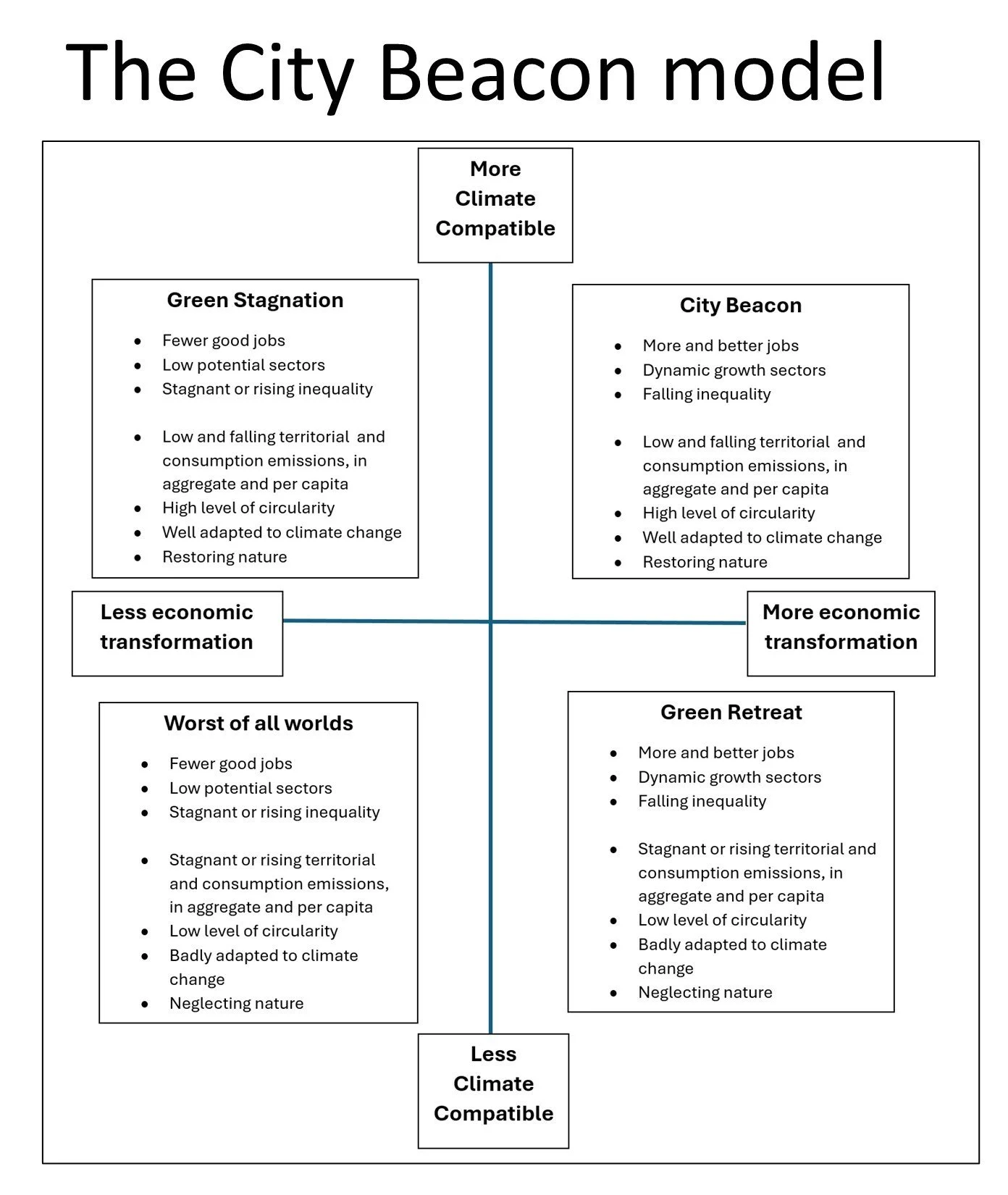
A long term perspective is essential, integrating economic, social and environmental concerns. The City Beacon model captures that idea, focusing on the twin objectives of transformation and being climate compatible.
Brighton and Hove has made progress, the result of national policy and sustained local engagement. Territorial emissions have fallen 60% in the last two decades. The City scores well on national score-cards.
However, Brighton and Hove remains highly vulnerable to climate extremes, especially heat and flooding. And consumption emissions have fallen much less than territorial emissions. The City scores only a ‘D’ on this measure, below the national median.
The City needs targets to bring emissions down, and to make progress on the other dimensions of the City Beacon model: more and better jobs, in dynamic growth sectors; falling inequality; better adaptation; circularity; and nature restoration.
There is detailed analysis, and there are concrete proposals in all areas of work undertaken by Climate:Change, in: economic development, energy, food, adaptation, nature, transport, and behaviour change.
In all of these, Climate:Change has emphasised the importance of participation, working with local communities, building on what is already happening, and building agency.
Future work must take account of devolution, exploiting the potential of the new Sussex and Brighton Strategic Authority, building a broad definition of ‘prosperity’ to include environmental considerations, and thinking regionally about strategic issues like transport, housing, jobs, and nature.
An AI-generated podcast on the event, courtesy of NotebookLM is here. No guarantee that it is 100% accurate, but, still, remarkable.
This meeting was held at Projects in Nile St, Brighton, on Thursday, 5 November 2026. The main purpose was to ask What’s Next in climate action in Brighton and Hove.
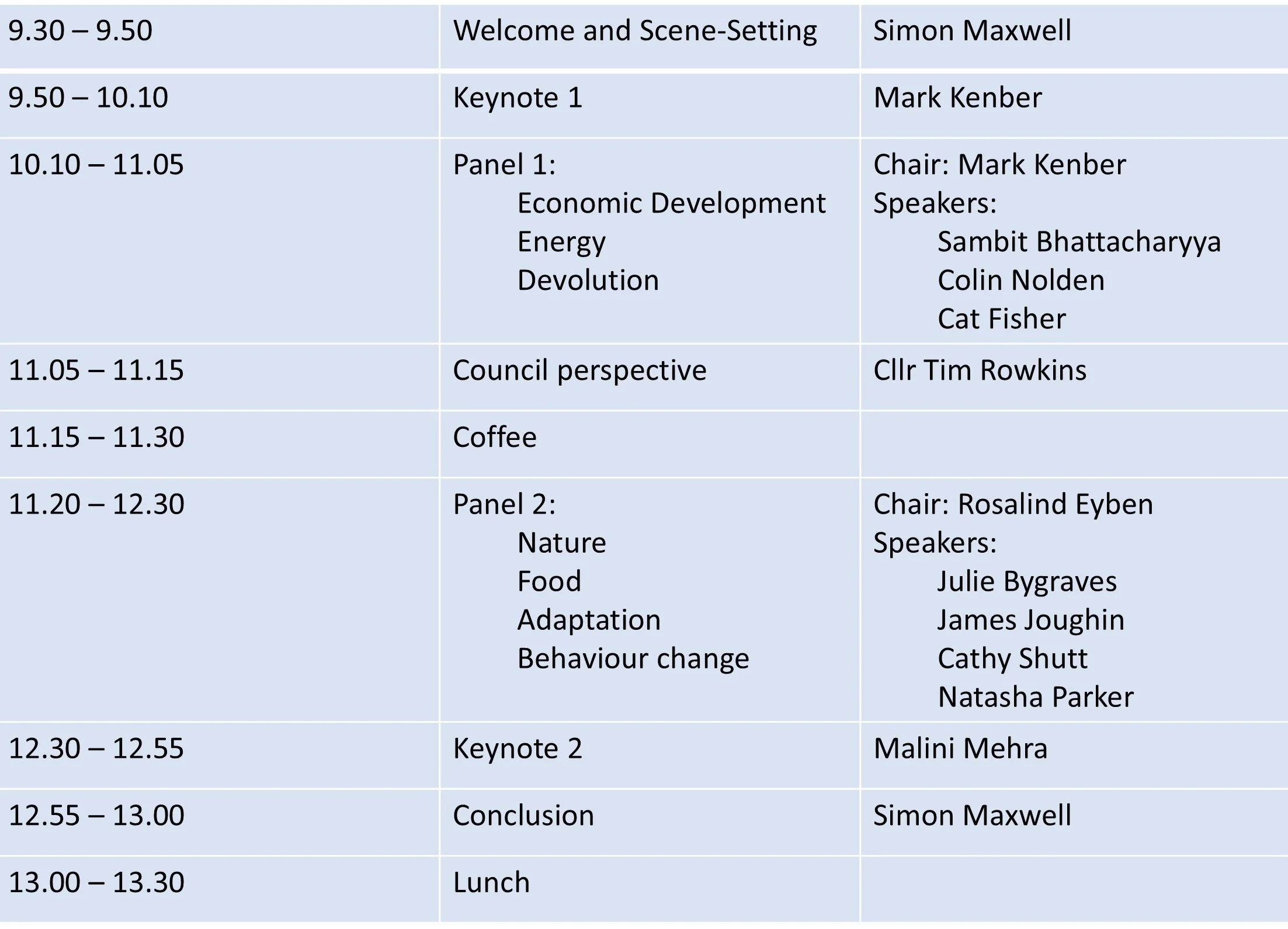
The programme (Figure 1) began with a scene-setting presentation by Simon Maxwell. There were two keynote presentations, by Mark Kenber and Malini Mehra, and two panel discussions. Cllr Tim Rowkins spoke on behalf of Brighton and Hove City Council. Simon reminded the audience that all the panel presenters had contributed Briefing Papers or other material on their specialist topics to the Climate:Change website, where all resources could be found.
Figure 1
Simon Maxwell’s Powerpoint is here. He provided information about progress in cutting global and national emissions, before focusing in on Brighton and Hove. Here, territorial emissions had fallen from 6.6 t per person in 2005 to 2.7 t in 2023, a fall of 60% in only 18 years. This was the result of significant effort by national and local authorities, and it was notable that B&H scored highly in various City rankings: ‘A’ in the Carbon Disclosure Project’s City ranking, sixth nationally in the Climate Emergency scorecard list, and seventh in the Green Cities Index.
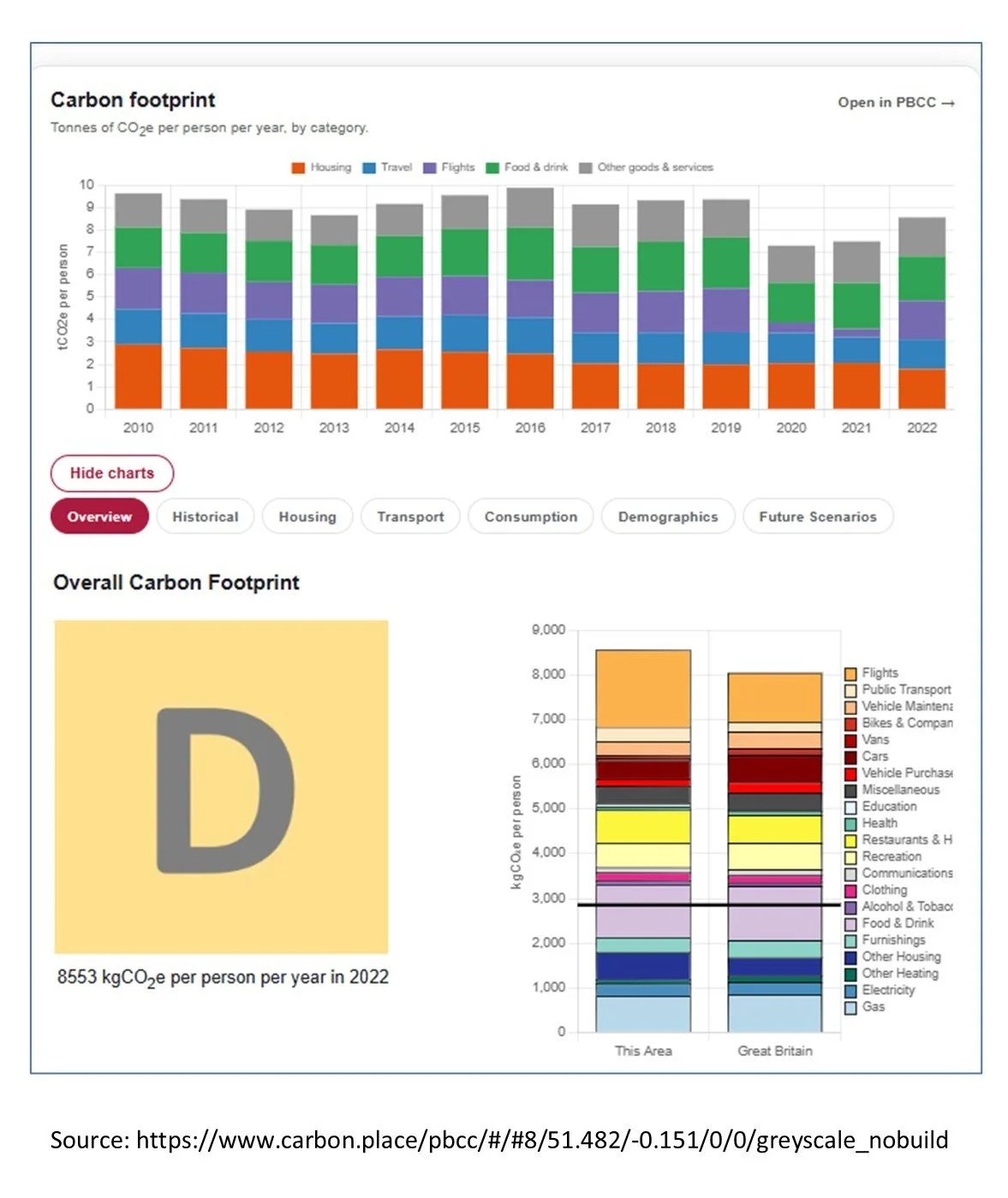
On the other hand, B&H remained one of the most highly flood-prone cities in the country, was ranked as highly exposed to heat stress, and faced other urgent adaptation challenges. And, in contrast to the fall in territorial emissions, the overall City footprint, measured by consumption emissions, had only fallen by about 10% since 2010, and was currently close to 9t per head. On this measure, Brighton and Hove scored a ‘D’, below the national median (Figure 2). Of course, there was wide variation in the footprint across the City, reflecting the unequal distribution of income and wealth.
Figure 2
Turning to the ‘exam questions’ for the day, Simon presented the City Beacon model, in which the City could aim for an outcome over the next decades that would deliver economic transformation as well as mitigation and adaptation outcomes (Figure 3). Questions were:
Was the City Beacon framing a purposive option for the City?
Could the meeting identify targets that B&H should aim for?
Could it identify and score measures the different stakeholders could adopt – private citizens and business actors, as well as the public sector?
And in this connection, did devolution and the creation of the Sussex and Brighton Strategic Authority offer new potential?
Figure 3
Mark Kenber then gave the first keynote address. He described his remarks (here) as a tour of European cities that had successfully taken climate action.
Lahti in Finland had provided residents with a personal carbon trading app, to measure transport emissions and reward those who walked, used cycles, or travelled by bus.
Freiburg in Germany had created extensive tram, bus and cycle networks, encouraging use of pubic transport with a flat-rate monthly travel tickets, and reducing car ownership to the lowest of any city in Germany - part-funded by selling off serviced plots of land, and charging a betterment levy on the sale of open land.
Ponteverde in Spain banned all through traffic from its city centre.
Ljubljana in Slovenia committed to pedestrianisation of its city centre, creating one of Europe’s largest continous car-free zones.
Malmo in Sweden invested in urban drainage and water management projects, integrating green roofs, retention ponds, and cloudburst management to counter heavy rains and flooding.
Mark made the point that none of these transitions was easy. It was necessary to be honest about the difficulty. Nevertheless, four conclusions could be taken from these (and other) examples:
First, cities can learn from each other, and should invest in building networks to that end;
Second, it is beneficial for cities to own their own heat systems, including via heat networks;
Third, the value of being patient and taking a long term perspective; and
Fourth, the importance of not seeing cities in isolation, and embedding climate action (and planning generally) in a wider, regional context.
Tim Rowkins spoke for the Council. He emphasized progress across the City, for example in fitting solar panels on Council-owned housing. He referenced the Decarbonisation Pathways Study, launched with Climate:Change in 2025 (here), and the proposed energy partnership, currently in preparation (see here). He was enthusiastic about devolution, and about other measures to give local authorities greater ability to deliver change, for example via control of buses.
The first panel, chaired by Mark Kenber, brought together Climate:Change contributors on economic development, energy, and devolution.
Sambit Bhattacharyya spoke on economic development. His Powerpoint is here. Other Climate:Change resources are here. Sambit made a strong case for sustainable economic growth as necessary to improve living standards and improve public services – and made the point that growth requires higher productivity and economic transformation. In Brighton and Hove, output per hour was higher than the national average, and higher, perhaps surprisingly, than cities like Oxford, Cambridge or Bristol. It had increased by 22% since 2019. At the sector level, ICT, business services, and scientific and technical sectors all scored highly.
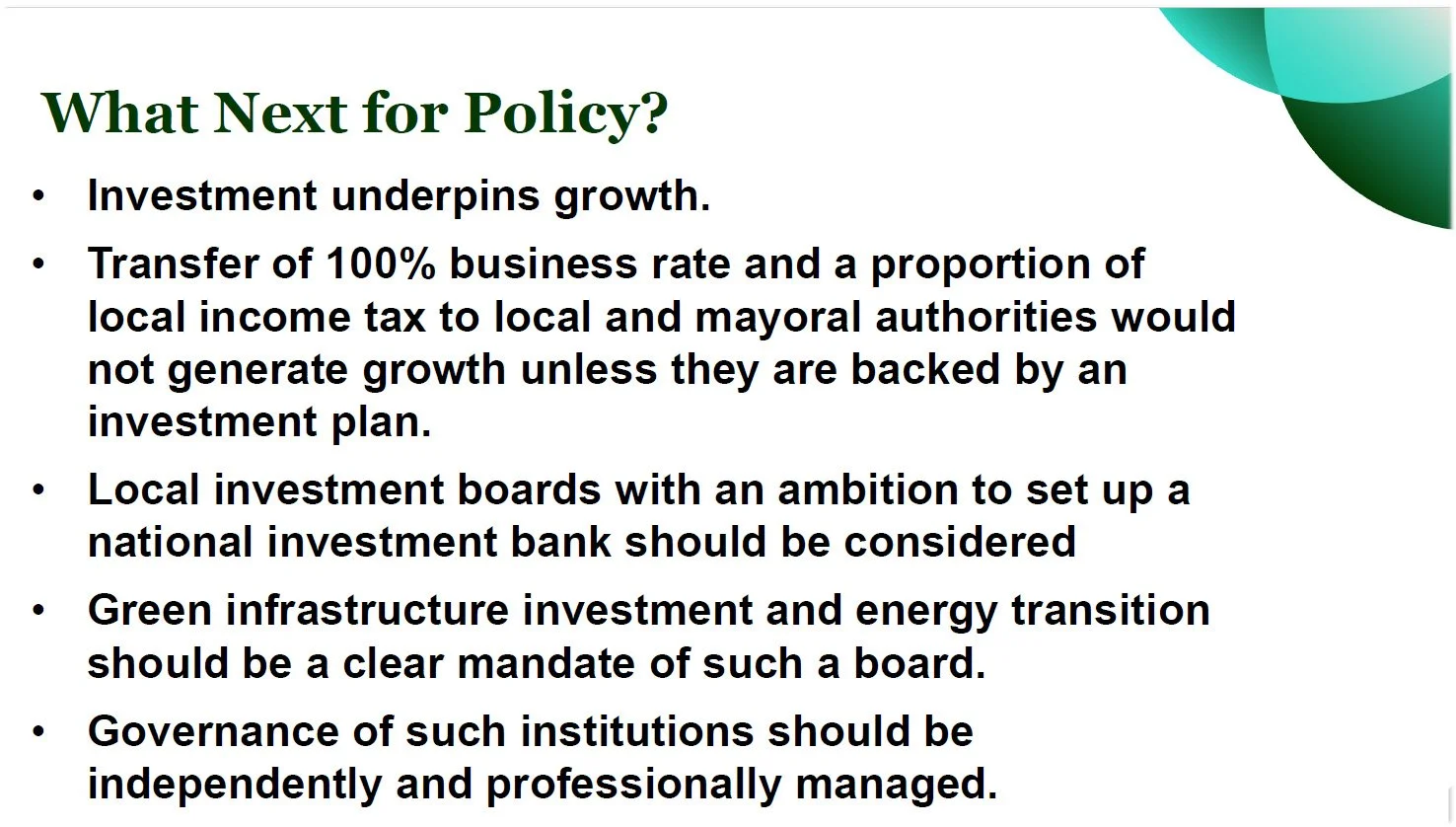
For the future, Sambit sounded a warning. Transferring resources to the local level would not generate growth without an investment plan. He recommended a local investment board, backed by a development bank, professionally managed and with a strong focus on green infrastructure and the energy transition. See Figure 4.
Figure 4
Colin Nolden spoke on infrastructure and energy. His speaking notes are here. See here for other Climate:Change resources. Colin made the point that the UK has about a third less infrastructure (e.g. housing, high speed rail or tram systems) than comparable European countries. It is also much more centralized, with a lower, often much lower share of public spending managed at sub-national level, and with less local control than counterparts over regulation. Central funding to local authorities is often tendered competitively.
‘The result is that UK cities such as Brighton and Hove manage a smaller range of utilities and have less experience in organising and delivering large infrastructure projects than European counterparts. Their ability to act on climate change is consequently also less than their European counterparts can deliver. Only 2-5% of territorial emissions are under the direct control of local authorities.’
Still, there was potential. Strategic Energy Partnerships, like the one B&H is developing, can help local authorities deliver innovative solutions like district heating. These can be especially impactful if partnerships are developed at regional level. Brighton and Hove also has a dynamic and successful community energy sector.
It was worth noting, in relations to debates about growth and degrowth, that spending to catch up with infrastructure investment and also decarbonise the economy, would necessarily be growth-inducing in the short run.
Cat Fisher spoke about devolution, arguing that it creates a new context for City Beacon as part of a multi-polar city region. Her presentation is here, with other resources here. Cat emphasized that devolution was already underway. The Sussex and Brighton Strategic Authority was in place, with an initial budget of £117m over four years; the election for a regional mayor woud take place in 2028.
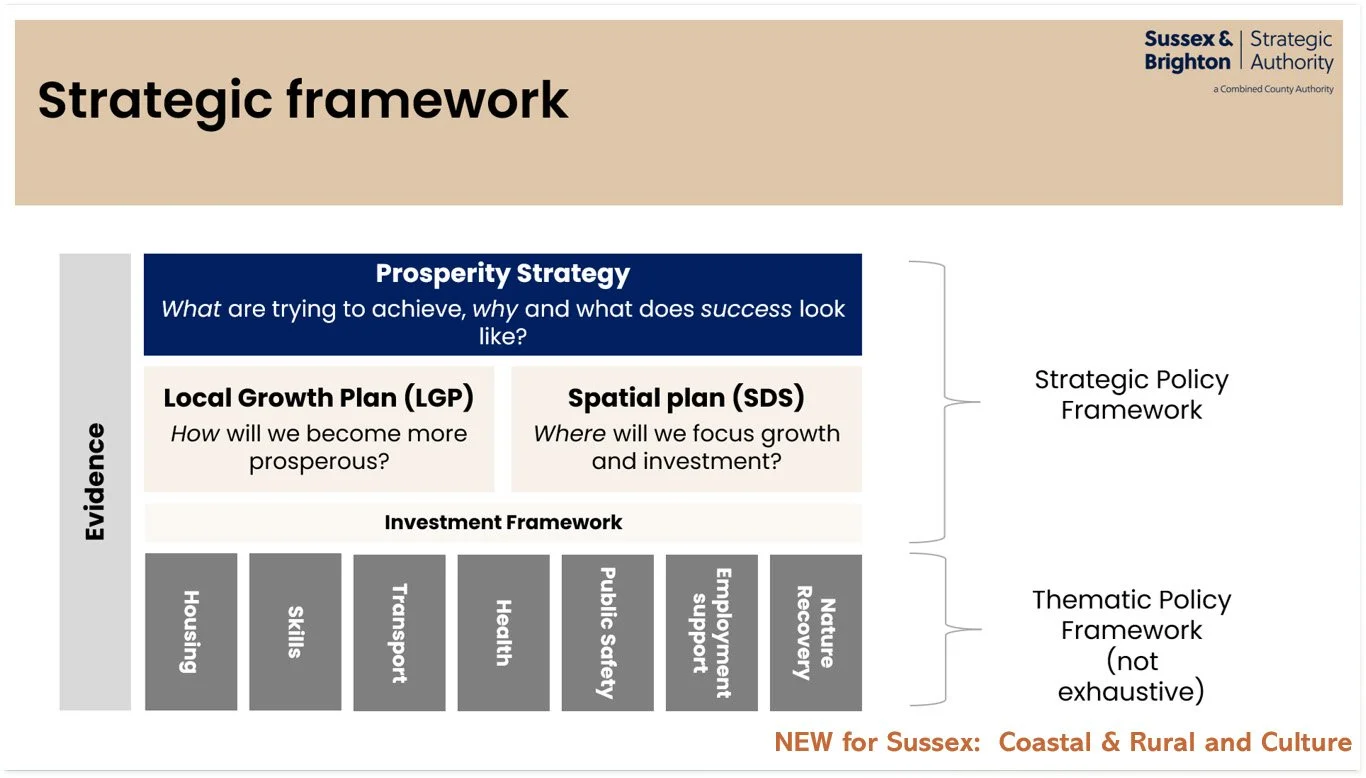
Cat explained that the over-arching framework for the SBSA was its Prosperity Strategy (Figure 5). At first sight, this did not sound like an environmentally-aware framing, but there had been a campaign to remedy this, and the definition within the SBSA’s draft Prosperity Strategy was now
‘Prosperity in Sussex is when people, place, nature and economy thrive together, now and in future.’
Cat highlighted the climate resilience language in the Draft Strategy, arguing the SBSA could provide regional-level leadership in adaptation, and for a definition of transformative adaptation that emphasised social justice. She then asked what mechanisms would effectively embed the vision of prosperity across SBSA operations. She suggested: a Climate Commission; a Future Generations commissioner; a focus on procurement; and embedding new models of citizen engagement & deliberative democracy. She encouraged participants to engage in the consultation process for the draft prosperity strategy, running from 16 November 2026 - 18 Jan 2027.
Figure 5
The second panel, chaired by Rosalind Eyben, featured Climate:Change contributors on food, nature, adaptation, and behaviour change.
James Joughin spoke on food. His presentation is here, with other resources from Climate:Change here. Some 30% of the UK’s footprint was associated with food, including production, transport, processing, packaging, food preparation, and waste. In Brighton and Hove, the hospitality sector was obviously important, counting over 1200 venues, and a significant share of food emissions was associated with institutions like schools and hospitals: these were two legs of the food system in the City. However, the third leg of domestic consumption remained the most important, accounting for perhaps 86% of total emissions; most of the food consumed here was purchased in supermarkets.
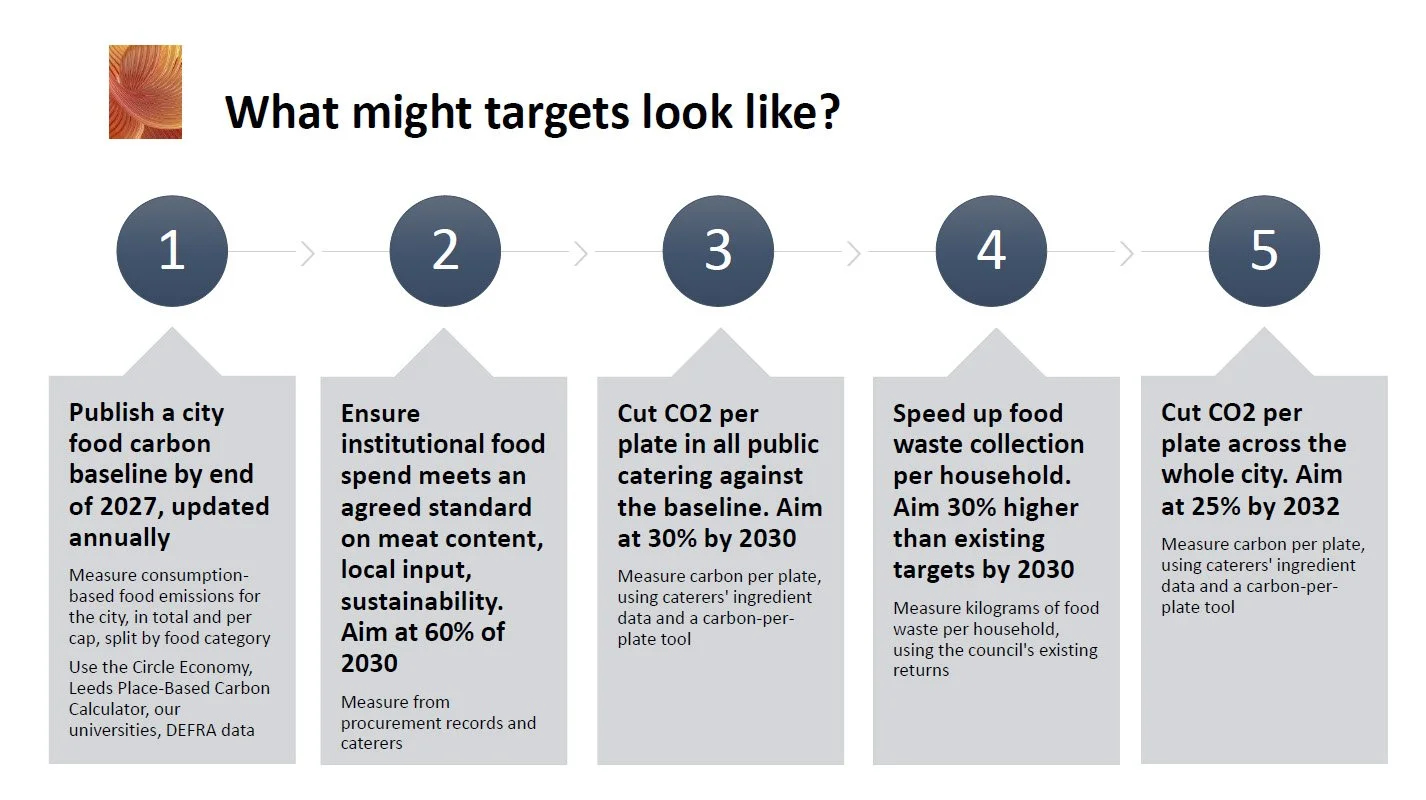
James celebrated the work of the Food Partnership, and its leadership of the Brighton and Hove food strategy. But as climate change took hold, he wondered whether there was not scope to do more, particularly in the area of diet and waste reduction. Responding to the exam questions for the day, James asked whether the City could not set specific targets to reduce overall emissions and emissions per plate (Figure 6): for example, a 25% reduction in emissions per plate by 2032. He identified who might do what to deliver these changes, under the umbrella of an active coalition for change in the local food system, with roles for the Council, the NHS, schools, and the Universities, as well as the Food Partnership.
James noted that cities in Europe had made large contributions to reducing food emissions: Milan, Ghent, Copenhagen and Amsterdam had been cited in previous Climate:Change events.
Figure 6
Julie Bygraves spoke on nature. Her presentation is here, with other resources here. Nature was under threat in all of the diverse habitats of Sussex, including in Brighton and Hove’s Downland Estate, in other inland habitats, and also in wetland habitats and off-shore ecosystems. There were very specific threats caused by urbanization, ever-increasing suburbs, over-tourism and industrial trawling (Figure 7).
There was also a failure properly to appreciate the role of nature and wildlife in climate strategies. The potential to sequester and protect carbon stores was being missed - in wetlands, ancient woodland, downland grasslands and kelp forests.
Figure 7
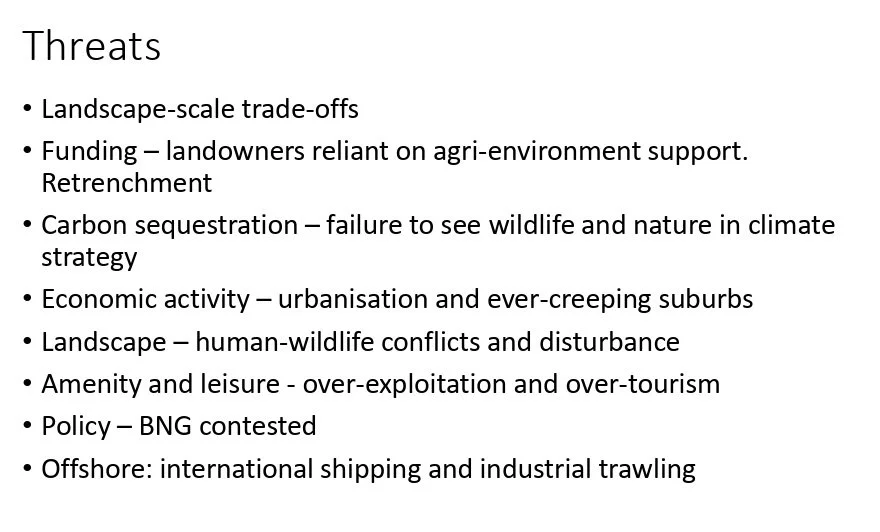
Julie made important points about the limitations of current policy. Carbon sequestration potential was threatened by inappropriate planning and the failure to restore ecosystems. Wetlands were often lost because of spillover of housing development, displaced from protected areas. Farmers were dependent on agri-environment support, but this had been cut. In construction, reducing emission required avoiding emissions from ground disturbance. Further, weakening of planning rules on Biodiversity Net Gain had reduced environmental protection.
Julie emphasized the need to think about the role of wildlife and nature at landscape level. There were great opportunities to boost wildlife and nature, and simultaneously increase carbon sequestration – and to do this while protecting economic activity and leisure opportunities.
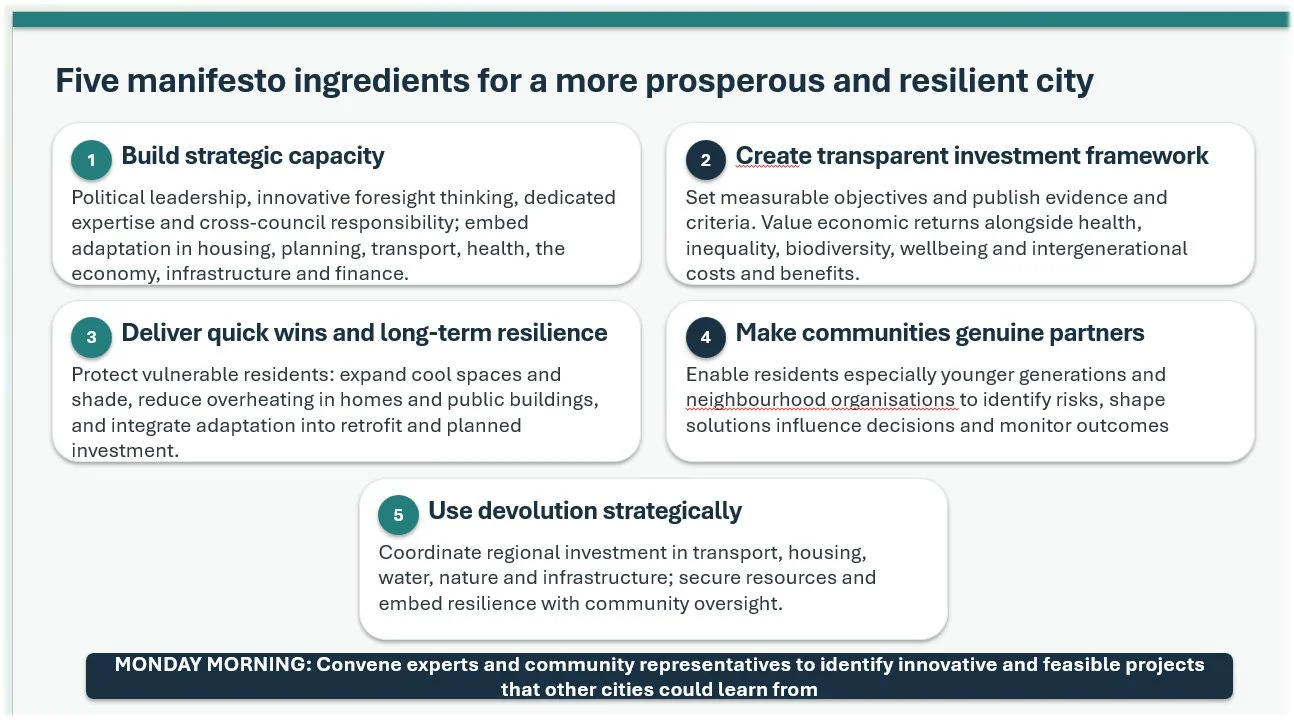
Cathy Shutt spoke on adaptation. Her presentation is here. Other resources from Climate:Change are here. Cathy recognized that adaptation was a high priority for Brighton and Hove, given exposure to threats like heat and flooding. Many individual projects could be – and had been – identified. However, Cathy made a different argument (Figure 8): that adaptation should be seen as ‘transformational’, an investment with wider reach
‘to build a prosperous city where people, place, the economy and nature are resilient and thrive together, now and in the future.’
Figure 8
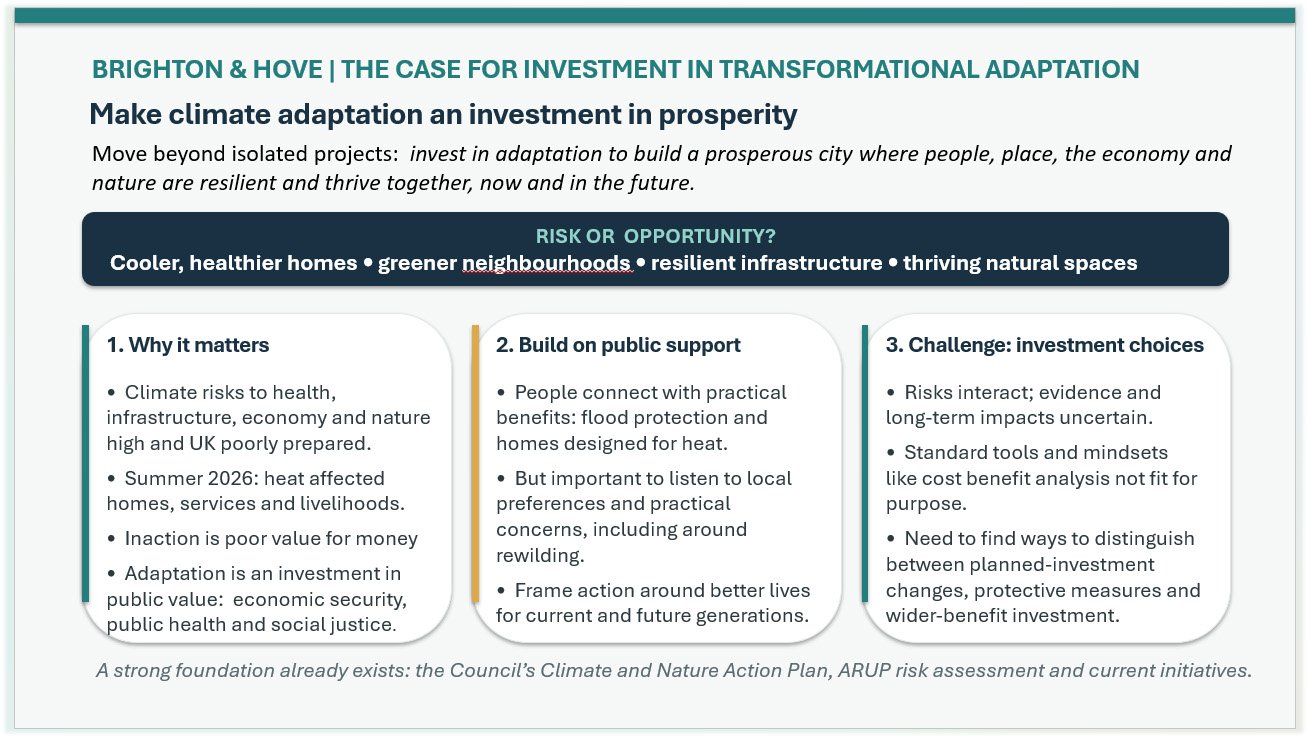
Public engagement and participation was key to making this approach a success. It was one of five manifesto ingredients Cathy proposed for the City, the others being to build strategic capacity, create a transparent investment framework, invest in ‘quick wins’ (for example address heat in homes, including listed buildings, and build long term resilience through coupling heating and cooling in large retrofit programmes), and use devolution strategically, for example, taking advantage of scale.
Figure 9
Natasha Parker spoke on behaviour change. Her notes are here, and other resources are here. Nationally, the Climate Change Committee estimated that around 60% of emissions reductions required citizens to behave differently in some way. People needed to install heat pumps and solar, eat less meat and dairy, waste less food, walk, cycle and use public transport more, and fly less. They also need to build stronger, more resilient communities, to cope with the impacts of climate change. And in all these respects, the most affluent had further to go.
However, behaviour change was not just about individual choices - individual, community and system changes are intertwined. A lot of behaviour change starts at policy and planning level - long before the ask gets to citizens. For example, if we want people to cycle more, then the need follows to make sure there are safe cycle lanes, cycling lessons in schools, cycle to work schemes etc..
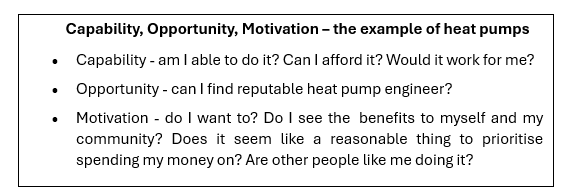
Natasha introduced the COM model of Capability, Opportunity and Motivation (Figure 10). Change would not happen without all of these. Further, Natasha emphasised the importance of social norms and of trusted messengers in communication and dissemination. And remember that many climate actions were also good for health and wellbeing and for stronger communities.
Figure 10
There were policy implications to this, for example, using nudges or making small changes like including plant-based options in menus. But key was working with residents. Many poorer communities were aready doing the right thing, for example in terms of fixing and reparing things. That should be celebrated. It was important that all our actions contributed to something bigger, adding up across the City.
The final plenary was given by Malini Mehra. She traced the long history of integrated sustainability planning, from the Rio Summit and Agenda 21 in 1992 onwards. She emphasised the importance of strong local leadership.
Many points were made and topics raised in discussion. Among them:
Strong endorsement for an approach that married environmental, social, and economic dimensions of sustainability;
Strong support also for public participation in decision-making, and the involvement of communities, recognizing different needs and resources, past and present contributions to climate change, and the amount already going on within communities around the City;
However, attempts to engage the public sometimes resulted in push-back. It would help to to focus on the wider benefits of the changes being made. People don't really experience benefits of ‘carbon reduction’ - but they do experience the benefits of cleaner air, better health, and stronger relationships with communities that can come from climate action, so it is best to focus on these front and centre. and avoid climate jargon when talking to the public;
Strong support for engaging in the devolution ‘project’;
Recognition that it was hard to measure progress without benchmark data and monitoring systems;
The need to make sure that if growth was needed at all, which some disputed, it should be green and sustainable;
The requirement that investment, in adaptation but also in mitigation, should be ‘transformational’, on all dimensions, and not just focused on maintaining the status quo.;
Recognition that women faced difficult challenges, including unique pressures around food and eating sustainably as they usually do most of the household management - it would be useful to talk to groups of women in the food (and other) work of Climate:Change.
Participants were asked to make specific suggestions for action during the event. A summary of these is in the Appendix, ranging from food and transport to energy and nature conservation. A prominent topic had to do with the importance of engaging communities and creating positive momentum: celebrating what the City had done, creating ‘joy networks’ to encourage sharing of best practice, and building support for positive climate action. Several participants suggested setting up a Brighton and Hove Climate Action Week, inspired by London, New York, and the other cities referenced by Mark and Malini.
Closing the meeting, Simon Maxwell thanked all speakers and participants. He made the additional point that the Climate:Change community had both an internal and external challenge. Internally, research and analysis needed to continue on all the issues raised in the meeting, for example on growth or transformational adaptation. Externally, the challenge was to continue building consensus on the need for climate action: climate change was not ‘the only thing’, but it could not be ignored.
__________
Appendix
Suggested actions from participants at the City Beacon Event
Arranged by theme, with specific actions in or by Brighton & Hove highlighted.
Part 1: Suggestions by theme
1. Understanding the footprint and measuring progress
Understand B&H’s carbon footprint from what it imports from elsewhere in the UK and abroad.
Choose indicators for growth and resilience, and draw up an investment road map that reduces the footprint.
BHCC to evaluate its experience with heat pumps in its own homes, have that independently checked, and publish the results.
Measure, and learn from what doesn’t work.
2. Food
Give food the same attention as the energy sector.
B&H to connect with networks, actors and grassroots groups in the towns and countryside around it, especially to build a resilient local food economy.
Connect the people at the event who are working to change how Brighton & Hove eats.
Network with other cities. Brighton’s food work is already sharing and learning with Belfast and Bristol.
3. Energy and housing
Use the council’s powers over minimum energy-efficiency standards: raise fines for negligent landlords and spend the money on enforcing the standards properly, to improve rented housing.
Set up an information hub that shows where the energy groups are, who runs them and how people can connect.
4. Nature, water and green infrastructure
Encourage modular living walls to slow water flow in areas prone to flooding. They also cool the urban heat island, grow edible plants, support wellbeing and biodiversity, and clean the air.
Design flood-water absorption areas so they double as public recreation spaces.
Recognise that nature doesn’t stop at the edge of the city; it isn’t only the countryside.
5. Local economy, transport and investment
Apply community wealth-building principles (the Preston model) so more of the economic benefit from investment stays in local communities.
Low bus fares in the city and the surrounding areas.
Create tax and financial incentives for producing essential goods and services locally, so buying local becomes more attractive.
Bring together and support new economic and business models: ecosystem coalitions across the private, public and third sectors, working on food, water, energy, nature, skills and jobs, plus the sharing economy.
6. Changing the conversation and engaging communities
Drop the word “climate”. It sounds dated, isn’t needed to make the case for green investment, and helps avoid cross-party roadblocks.
Create “Joy networks” so different groups can share, encourage and learn from each other.
Build a sense of community and place so people act as citizens rather than consumers, moving the focus from personal blame to systemic change.
Invest in creative, participatory processes for visioning and transformation.
Engage communities in ways that build a political mandate for investing in low-carbon infrastructure.
Bring out all the good work already going on in B&H and make the change people want to see visible.
7. Convening and next steps
Hold a Brighton (B&H) Climate Action Week. Two participants suggested this separately.
Run a follow-up series of solution-focused workshops with the same stakeholders to agree clear action plans, toolkits and funding flows.
_________________
Perspective pieces are the responsibility of the authors, and do not commit Climate:Change in any way. Comments are welcome.
Simon Maxwell is Co-Chair of Climate:Change
Mark Kenber is Executive Director of the Voluntary Carbon Markets Initiative, and a Board Member of Climate:Change
Sambit Bhattacharrya is a Professor of Economics at the University of Sussex
Colin Nolden is a Senior Research Fellow at the Energy Institute and Management School of the University of Sheffield.
Cat Fisher is an independent consultant, specialised in climate-focused learning
James Joughin leads on food policy for Climate:Change
Julie Bygraves is a public policy analyst and consultant, who writes about Sussex wildlife and landscapes
Natasha Parker has a PhD in Environmental Psychology
Cathy Shutt is a specialist in evaluation and value for money assessment. She has worked on climate issues since 2002 and is a member of the Climage:Change leadership team
Malini Mehra is an award-winning sustainability leader, currenty chief executive of GLOBE Legislators, the environmental legislators organisation.
Tim Rowkins is Deputy Leader of Brighton & Hove City Council, and Cabinet Member for Net Zero & Environmental Services.