London Climate Action Week Meeting Report. Food and Climate at Local level: From Mapping to Policy
London Climate Action Week Meeting Report. Food and Climate at Local level: From Mapping to Policy
This meeting during London Climate Action Week was co-sponsored by Climate:Change and the Food Foundation. It was originally to be held at the offices of the Food Foundation in London, but was moved online because of the heat wave and train delays. There were three speakers:
Hamish Forbes, Specialist, WRAP
Kristin Strandberg, Cities Lead, Circle Economy
Leon Ballin, Place-Based Food Systems Manager, Food Foundation
James Joughin, Food Policy Lead, Climate:Change, made closing remarks. The meeting was chaired by Simon Maxwell, co-Chair of Climate:Change.
Opening the meeting, Simon took the opportunity to congratulate Anna Taylor, ceo of the Food Foundation, on being awarded a DBE in the Birthday Honours. She was now Lady Anna Taylor, a high honour very well-deserved for her many contributions to UK and global food policy.
Simon emphasised that this was a think-tank event, not a campaigning event. The primary objective was to bridge the gap between mapping food-related greenhouse gas at national level and devising actionable local policy. Hamish would report on national data. Kristin would describe London’s food footprint and also explore policy options. Leon would talk about local action, especially in Birmingham. Simon reminded the audience that similar discussions had previously been held in Brighton and Hove; the hope now was to explore applications around the UK.
The national food footprint
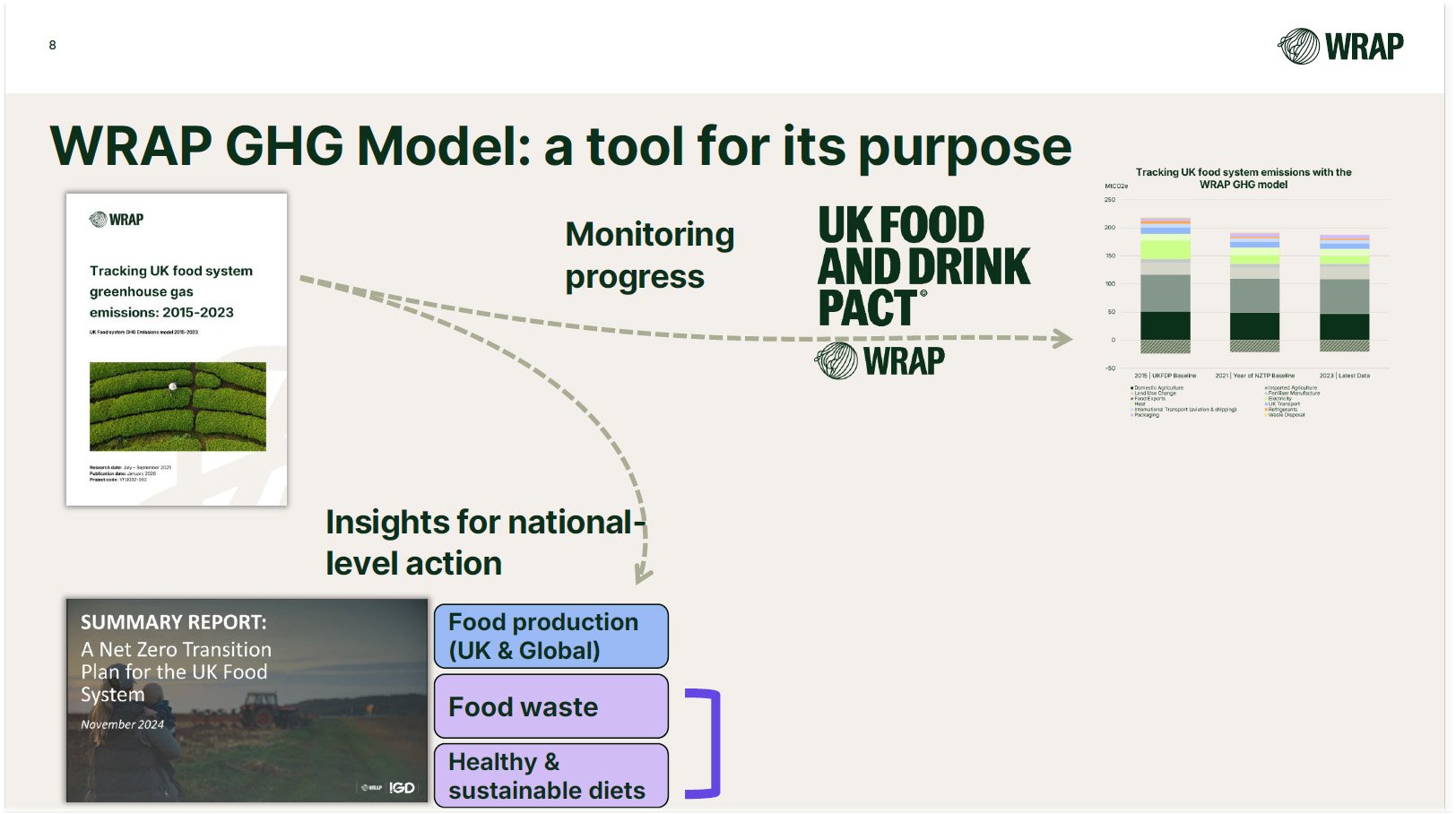
Hamish’s powerpoint is here. He presented the technical methodologies utilized for modelling UK food system emissions. He outlined two primary "lenses" for estimation: the product lens and the lifecycle stage lens. The product lens uses lifecycle assessment (LCA) data to sum the impacts of specific items, making it suitable for analyzing individual diets or restaurant menus. However, Hamish cautioned that LCA values are subject to significant uncertainty based on variations in the way different commodities are produced (e.g. tomatoes grown under glass in winter in the UK, or under the sun in Spain). Conversely, the lifecycle stage lens utilizes national inventory and government time-series datasets to track shorter-term changes within sectors, such as grid decarbonization or pandemic-related dips in the hospitality sector.
Hamish emphasized that data and modelling are tools rather than absolute truths and that local mapping should focus on providing specific, actionable insights - such as identifying hotspots in procurement - rather than merely confirming high-level trends. WRAP had contributed to the net zero transition plan for the UK food system (Figure 1). However, he concluded that while data provides direction, achieving systemic change requires buy-in from the “artisans” of the food system, such as chefs and procurement managers. Data, he argued, is necessary but not sufficient for transformation. Data is a tool which must be wielded to be useful.
Figure 1
London’s food footprint
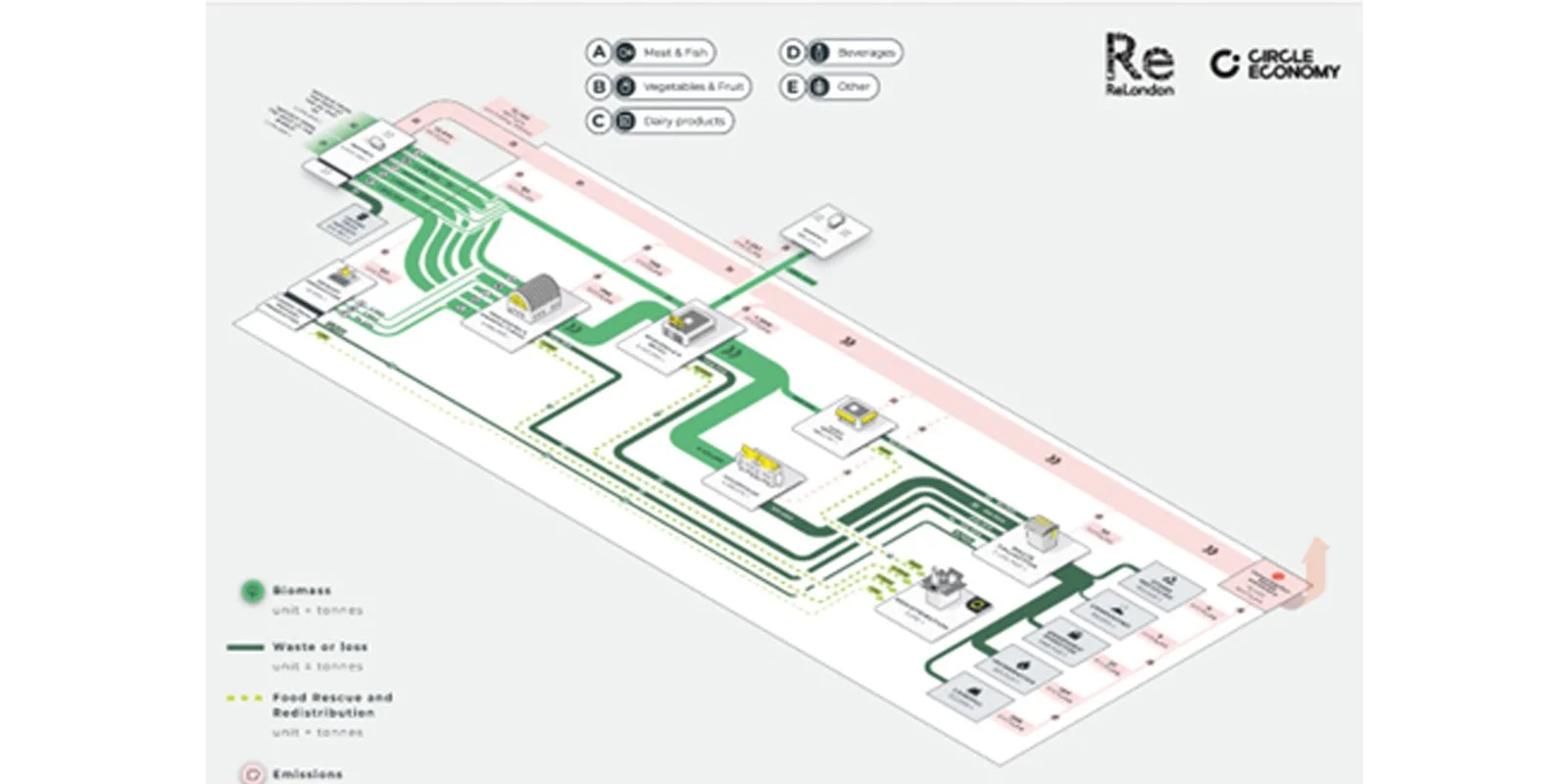
Kristin’s Powerpoint is here. She introduced the very detailed analysis of London’s food footprint, conducted for ReLondon (report here). She noted that the global food system is responsible for approximately 30% of global GHG emissions and is the primary driver of terrestrial biodiversity loss. The London study combined material flow analysis with consumption-based emissions assessments, revealing that over 7 million tonnes of food enter Greater London annually, equating to 760 Kg per person. Within the city, 87% of food is consumed in households, while the hospitality sector accounts for 13%. Waste was significant throughout the food chain, from the farm level onwards. London had below average outcomes for waste recycling. The findings could be summarised in a Sankey diagram, with the width of the material flows and the GHG emissions representing the weight of different elements. See Figure 2.
Figure 2
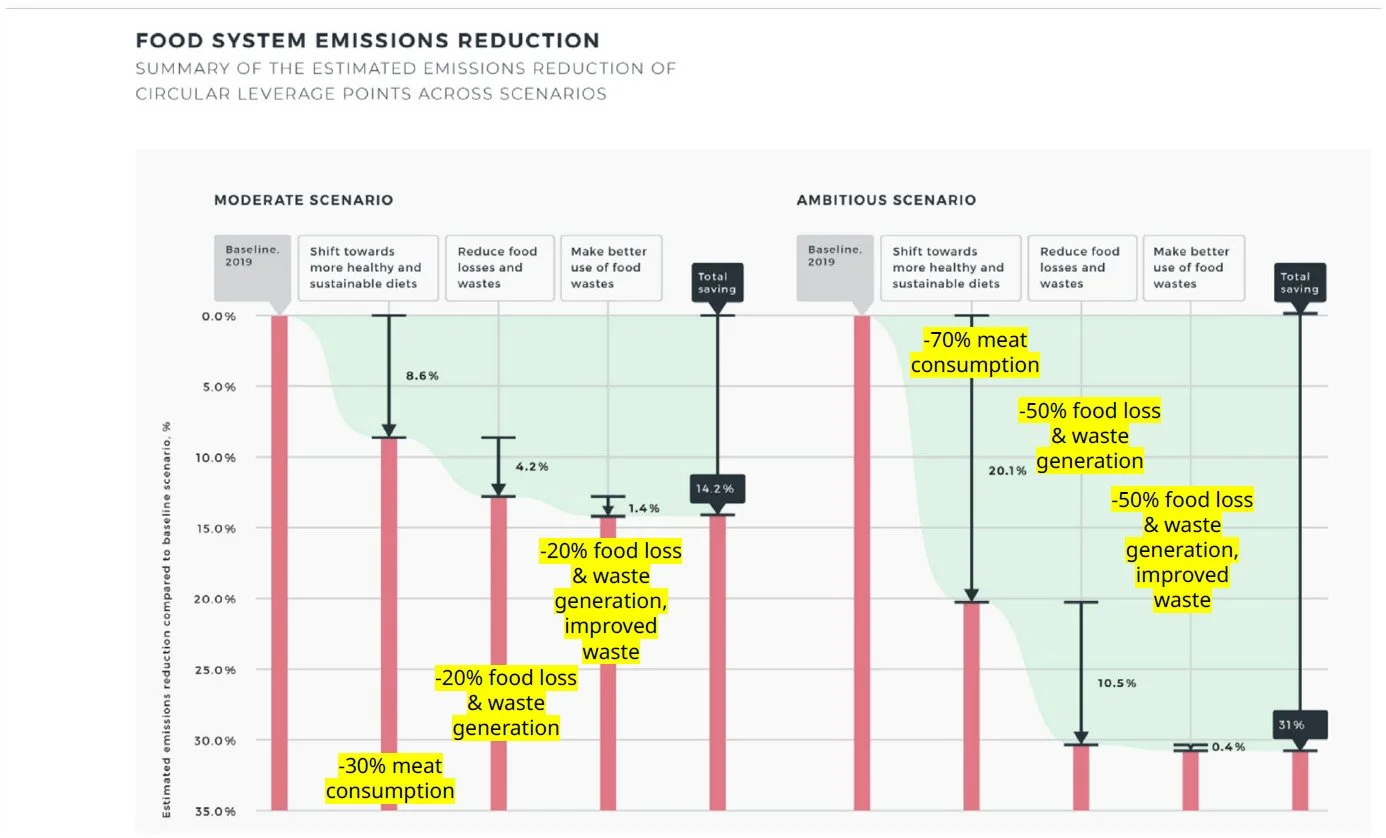
Using the detailed analysis, Kristin presented two reduction scenarios for London: a moderate scenario (30% meat reduction, 20% waste reduction) yielding a 14.2% saving, and an ambitious scenario (70% meat reduction, 50% waste reduction) yielding a 31% saving. See Figure 3.
Figure 3
Finally, Kristin introduced the "Urban Policies Action Framework," categorizing interventions into five levers: Manage, Educate, Mobilize, Regulate, and Incentivize (Figure 4).
Figure 4
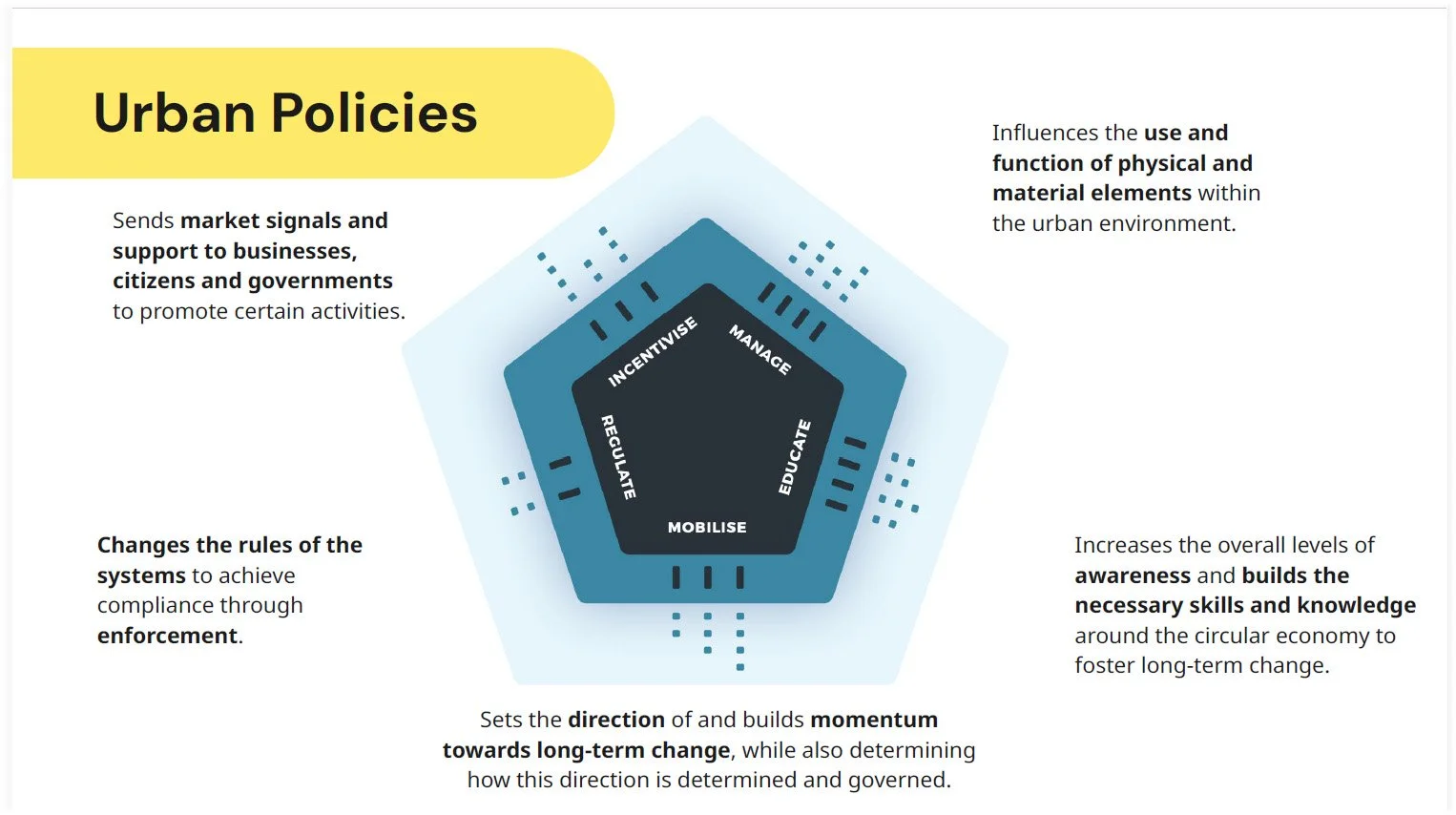
She gave practical examples of how cities were taking action under these headings:
In Copenhagen, where 115,000 meals a day were supplied to schools, care homes and social institutions, a municipal food procurement strategy had delivered a 25% reduction in the carbon footprint;
In Ghent, a veggie day had been introduced across all schools and public services, and a logistics platform had been created for food buyers to source locally.
In Mouans-Sartoux, 100% organic food had been served in canteens, with the extra cost covered by reduced waste.
In Milan, the existing waste tax had been turned into a climate and social policy lever, for example with businesses donating surplus food to charities receiving a 50% discount on the tax.
In Amsterdam, advertising of any form of meat product had been banned on all city-owned and managed outdoor advertising infrastructure.
The Food Foundation: Birmingham and beyond
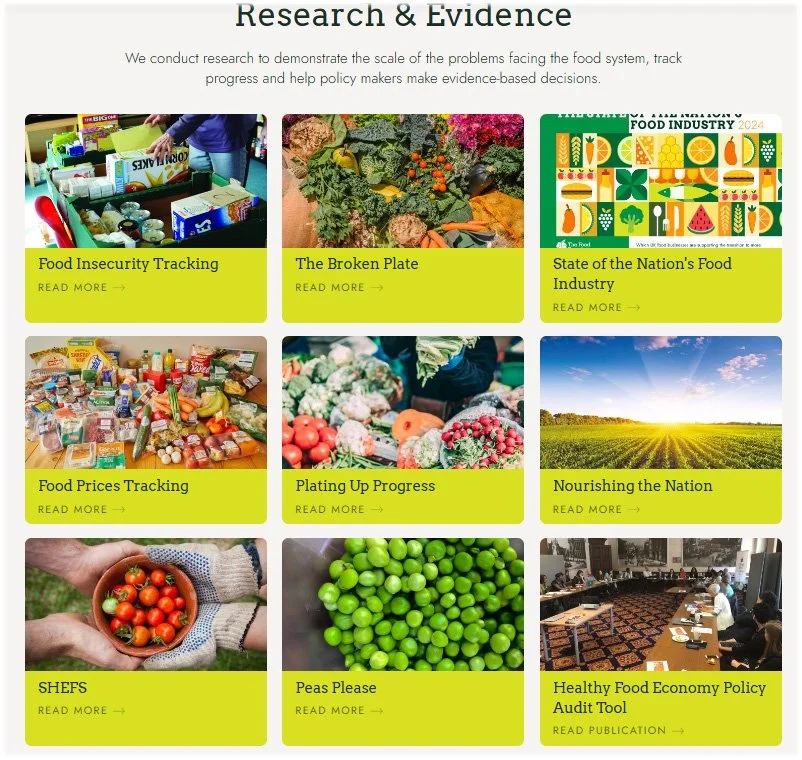
Leon’s presentation is here. He discussed the practical application of these mapping strategies, with a focus on food justice and systemic impact. He reported that the Food Foundation aims for bold national targets, including a 30% reduction in meat consumption and a 30% increase in fruit and vegetable intake. He detailed the "Bang in some Beans" campaign, noting that major retailers like Lidl, M&S, and Waitrose have pledged to significantly increase bean sales by 2028. All this was backed up by the Foundations’ research and evidence work (Figure 5).
Figure 5
In Birmingham, the largest unitary authority in Europe, he highlighted several interventions:
Holiday Activity and Food (HAF) Clubs: Over 700 clubs utilize the "Full of Beans" programme to promote plant-rich diets through education and cooking demos.
Agroecological Procurement: A pilot program sources organic produce from a Welsh growers' consortia ("Our Food Trust") for HAF clubs to test price points for sustainable local supply chains.
Institutional Reform: At the Women’s and Children’s Hospital, the Mandala Consortium introduced "blended" protein dishes (e.g., 20% lentils in lasagna) with the expectation the dishes will be acceptable patients while reducing emissions.
Wholesale Market Waste: A new system redirects surplus produce from the Birmingham wholesale markets into social retail chains like food pantries.
Leon underscored the importance of "baselining" procurement for universities and NHS trusts—mapping current protein splits and waste levels—before designing further interventions. He also noted the social dimensions of the food system, reporting that 1.4 million food sector workers are currently paid below the Real Living Wage.
The Food Foundation was working with local authorities across the country, and with the UK Urban Food Forum, a collaborative forum for local authorities. The Foundation was advocating for a Good Food Bill, that would include statutory targets, a reference diet to guide policy development, Good Food Action Plans, ministerial duties, local plans and independent oversight.
Discussion
The discussion session addressed technical challenges and the role of stakeholders in system change. A participant from ReLondon confirmed that the urban metabolism data had been transformational in making the business case for low-carbon diets and waste prevention campaigns like "Eat Like a Londoner".
Participants discussed the economic dimensions of waste, with an anecdote from Southwark describing how a digital ordering app allowed kebab shop customers to remove unwanted garnishes, thereby reducing both waste and operational costs.
Leon addressed the issue of "rockets and feathers" in food pricing, where retail prices rise faster than wholesale prices, and suggested that regulatory bodies should be consolidated within Defra to ensure fair practice.
The panel also explored the "tomato test," noting that carbon analysis must be holistic and consider factors like heated greenhouses versus transport emissions, as well as biodiversity and local economic resilience.
Finally, the discussion touched on institutional catering, suggesting that "blended" proteins in familiar dishes like lasagne can bridge the gap between climate goals and patient satisfaction.
Concluding remarks
In closing remarks, James summarized the findings by stating that measuring local food-related emissions is both useful and feasible. He observed that public engagement increases when data reveals the stark realities of the food system. He argued that Brighton and Hove is well-positioned to lead a wider movement due to its effective council and powerful food partnership. He proposed the establishment of a learning network over the next six months, comprising 5 to 10 UK towns and cities. This network would develop a common approach to measuring emissions, share data and methodologies, and build a robust evidence base to demonstrate to the national government that local authorities are ready to manage these significant emission sources.
Simon concluded the meeting by thanking the speakers for their excellent presentations and the audience for their contributions. He reiterated that the ultimate goal of these mapping exercises is to move from merely measuring emissions to actively changing them through collective action and the sharing of best practice.
____________
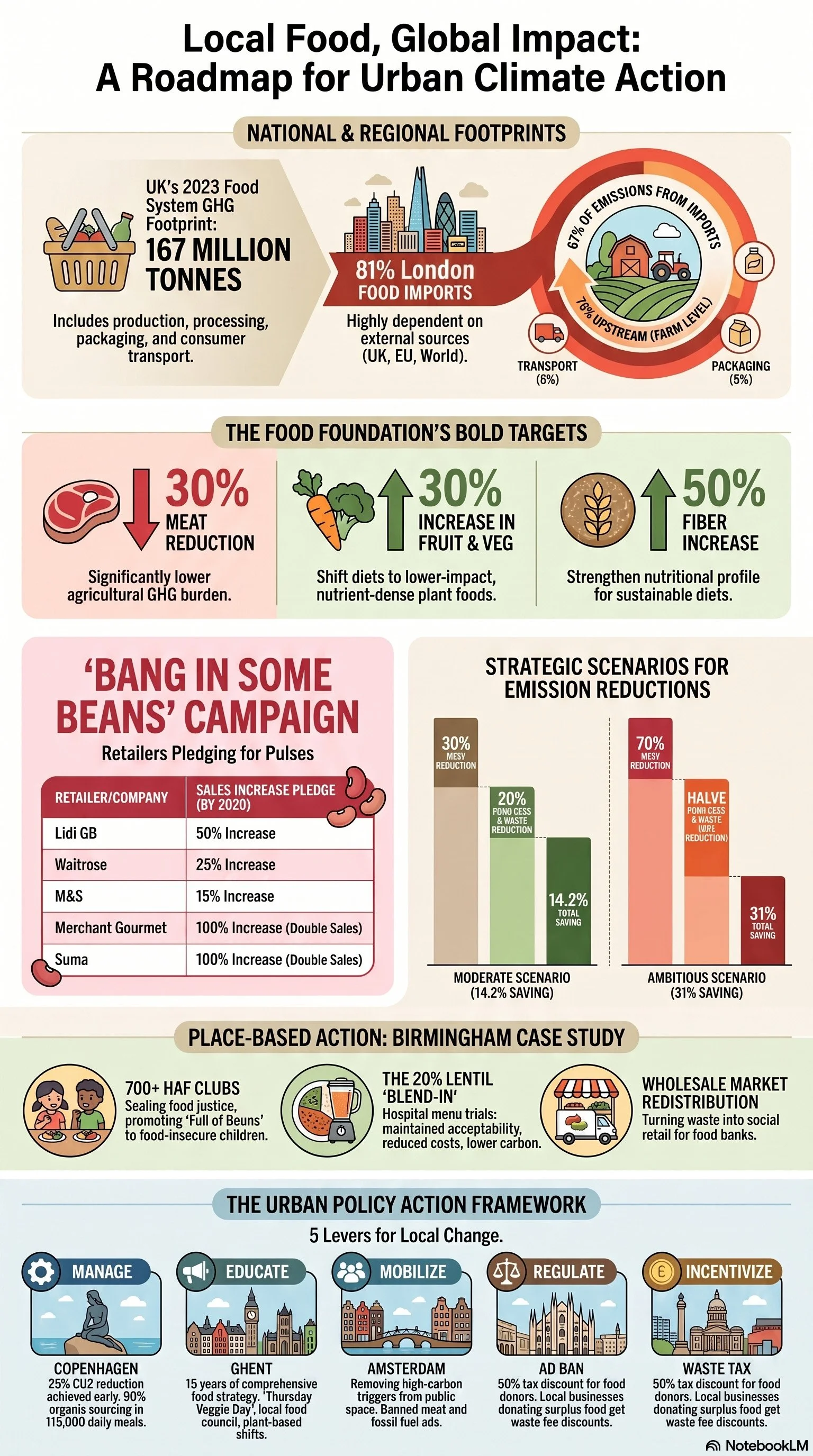
Note: The Infographic used in the cover picture was constructed from the meeting record and the Powerpoints by NotebookLM. It is reproduced below, in case anyone wants to use it.
NotebookLM also generated a podcast based on the event materials. It may have the odd error, but is pretty good. Here it is:
Simon Maxwell, Co-Chair of Climate:Change
Perspective pieces are the responsibility of the authors, and do not commit Climate:Change in any way. Comments are welcome.