
Meeting Report. Climate:Change at LCAW 2026
Climate:Change at LCAW 2026
Climate:Change took the plunge at London Climate Action Week this year. We organized our own event, jointly with the Food Foundation, on tracking food-related GHGs at local level. But we also fanned out across London in the heatwave, and attended events online. We covered events in venues grand and not so grand, on topics ranging across the spectrum. We were especially interested to learn about other cities, and what might be useful for Brighton and Hove. These are our notes, with contributions from Roxana Chen, James Cuddy, Cat Fisher, James Joughin, Simon Maxwell, Michelle Parlett, Joshua and Isabella Perkins, and Susan Pieri. They are organized as follows:
1. The process
2. The argument
Climate change is here
It is not surprising that a strong case is being made for the benefits of investment in adaptation and resilience, including nature-based solutions
Though finance is still lacking in that general field
Meanwhile, nationally and globally the energy transition is happening
Electrification will be the focus
Finance is available for the energy transition, but held back by regulation
But there are wider issues of governance, partnership and state action
Does all this automatically imply a just transition? Of course not. Inclusion is not an afterthought.
Political engagement starts with better communication.
3. Implications for Brighton and Hove
Note that this is a compilation of points we heard at LCAW. There will have been many points we did not hear. And it goes without saying that some of us agree with some points, not with others.
The process
LCAW really is huge, with around 1300 events scheduled over the week (20-28 June). All credit to the organisers. There were thousands of people, the organisers say over 100,000: at least 600 people at the Innovation Forum, hundreds more at the climate politics event, what looked like a completely different crowd at the Reset London event at the Excel, and a different crowd again at the Cities Summit. Numbers would have been higher had there not been the heat alert. Attendees ranged from international leaders to Government ministers, civic leaders and officials, lots of business people, NGOs and academics. Like a COP! But we didn’t meet many city think tanks.
Needless to say, it is hard to navigate LCAW. Some events are paid, some are free, some are open, some closed. It often seemed like the most important meetings were happening in private rooms, or behind doors marked ‘invitation only’. It was a bit like Davos in that respect, with the added complication that events were scattered all over London, so travel time had to be factored in.
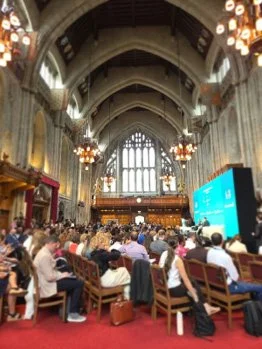
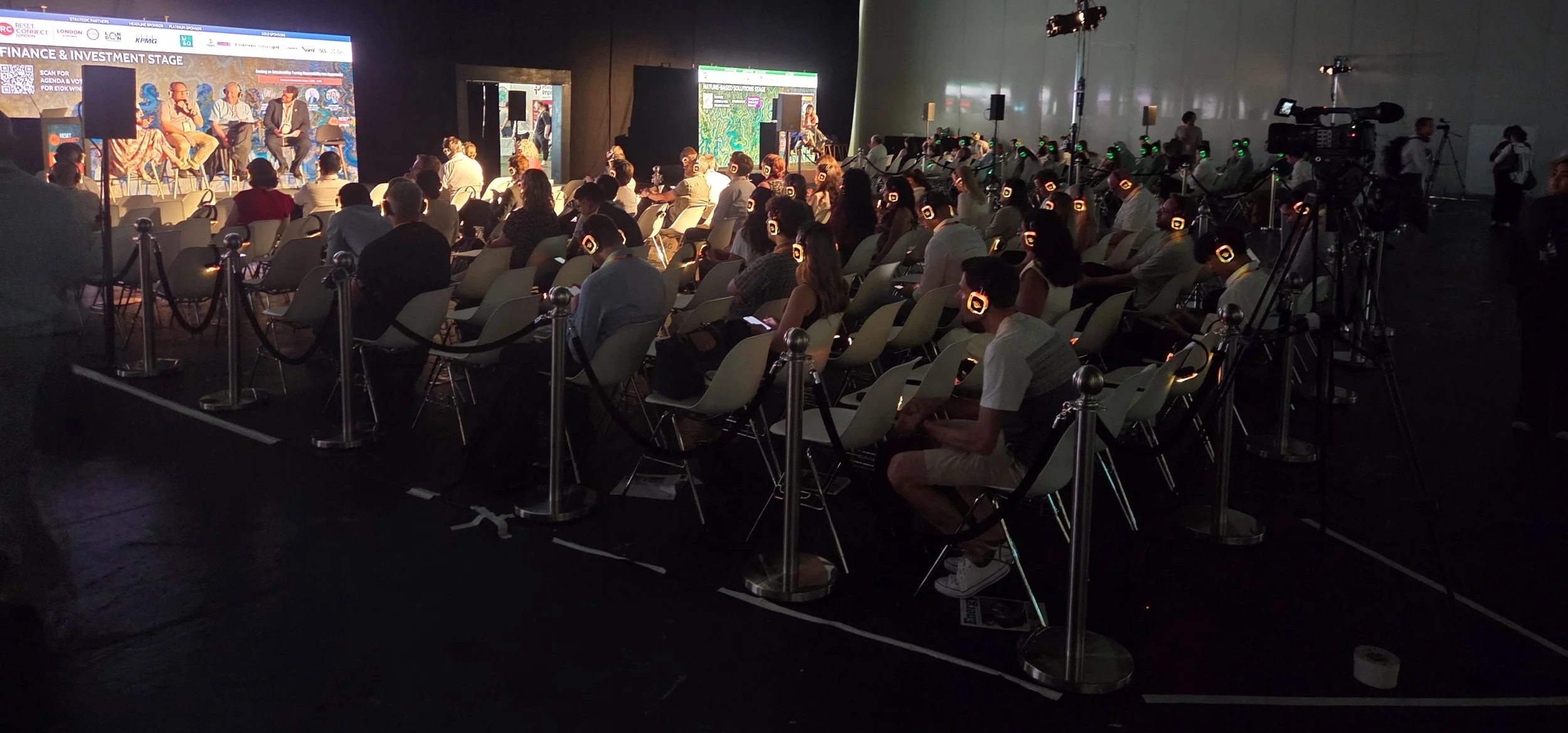
The venues were often magnificent: the Guildhall, the Mansion House, County Hall, the Excel Centre (the last not magnificent, but impressive). Also, the organisers of large-scale events were uniformly slick: dedicated apps, huge display banners. big screens, sound engineers in control booths, multiple video cameras, plentiful stewarding, high class snacks and lunches, lots of trade fair type booths and displays in ancillary rooms. The use of headphones to support multiple stages next to each other was particularly impressive at the Reset London event. The larger events must have cost a fortune. All the organisers thanked multiple commercial sponsors.
And finally, there are points to be fed back about programme planning and moderation. There were an awful lot of ‘show and tell’ sessions: ‘keynotes’ or ‘fireside chats’ or panels, with no real interaction with the audience (though a few questions were sometimes allowed, and the Innovation Forum used Slido to gather audience questions). Sessions were also often quite short, so moderators did not really have time to develop points in any detail; and also did not really set out to test arguments. For Simon’s teaching notes on how to moderate public meetings, see here.
It is worth remembering that the other event we wanted to run, on climate compatible development, city beacons and city think-tanks, didn’t find a home, so didn’t happen. A pity. We have something to say, and could have scored with a keynote, or a panel, or even a fireside chat! Next year.
The argument
Peter Drucker’s well known aphorism came up, that the best way to predict the future is to create it. In that spirit, from our sample of events, an argument:
Climate change is here
Of course, it is evident that climate change is happening and will get worse. Hardly a session passed without reference to the heat wave.
It is not surprising that a strong case is being made for the benefits of investment in adaptation and resilience, including nature-based solutions
Baroness Julia Brown, who leads on Adaptation at the Climate Change Committee, summarised the recent report we have been writing about, including the eight adaptation targets for the UK. It would have been good to ask about the assumption in the report that we will face 4 degree warming by 2100, and also ask about graduated adaptation pathways rather than shopping lists, but she had to leave immediately after speaking.
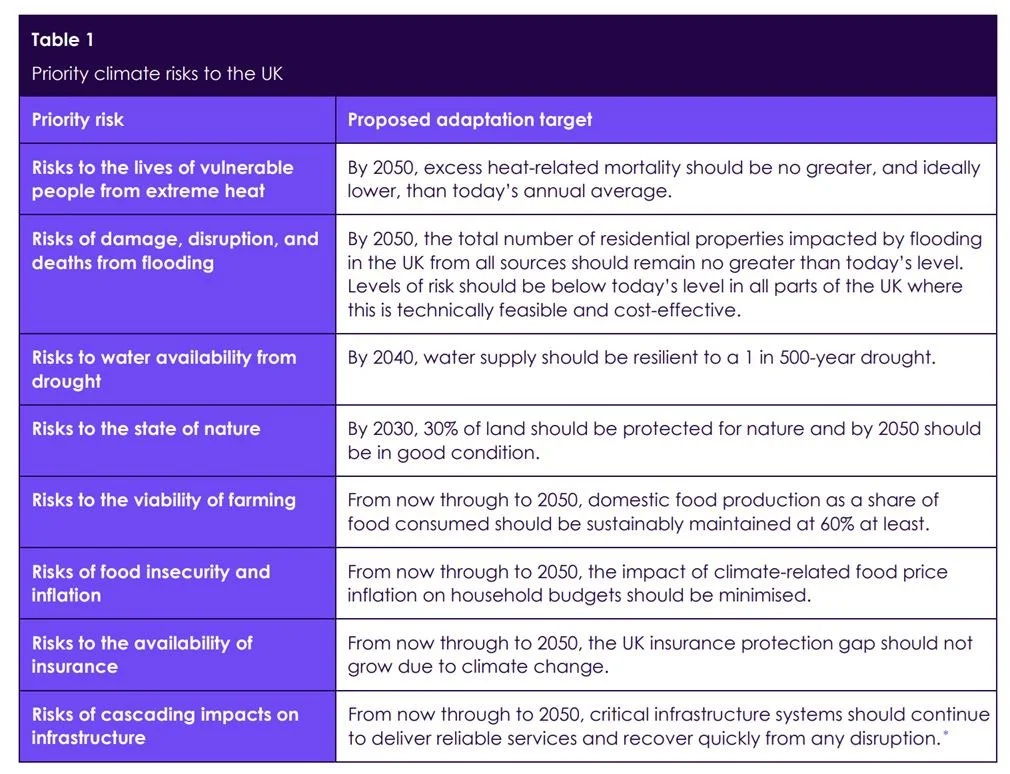
Julia Brown’s messages were echoed everywhere, however. Adaptation is becoming a core economic and business priority as organisations are increasingly recognising that climate adaptation is also about protecting assets and supporting long-term economic stability. Thus, being a resilient/sustainable business has become a commercial comparative advantage, something that insurance companies will increasingly look at when considering liabilities
The CCC Adaptation Report quantifies the economic benefits of investment adaptation. Here, a major Arup report quantified the economic case for heat adaptation in the UK. The cost of inaction is enormous and currently largely invisible. Heat-related costs (deaths + GVA/productivity loss) to the UK are currently around £4 billion per year, taking into account deaths and lost productivity. Under a high emissions scenario, this is expected to rise to £12 billion annually by the 2050s, comparable to the entire current estimated cost of adapting to all climate hazards combined. Without action, projections suggest 10,000+ excess deaths per year by the 2050s. Most of this cost is not being accounted for in current planning.
Targeted adaptation offers a compelling return on investment. Focusing on the 30% most heat-vulnerable areas (which account for over 60% of national risk), Arup generated benefit-cost ratios of up to 3.23 (central scenario) and 6.7 (high warming scenario).
Nature-based solutions achieve huge co-benefits but can't do it alone. Urban greening packages see nearly 50% of their total benefit value come from co-benefits: stormwater management, carbon sequestration, and recreational value. There were many excellent examples, for example in Warwickshire Avon, Norfolk, Warwickshire Avon, & Trent.
A delegate raised the concept of charging developers for measurable Urban Heat Island (UHI) contributions, with funds ring-fenced for city-wide mitigation. This is currently technically difficult: London's plan only vaguely states new developments 'should not adversely contribute' to the urban heat island, with no measurement framework. Panellists drew analogies with the ULEZ: change must be gradual, evidence-based, and crucially, built on stories that connect to individual experience. In the absence of national guidance or legislation, making the business case directly to developers (showcasing thermal comfort and market demand) could drive competition among developers to adopt integrated passive/active packages. In the meantime, planning requirements on passive cooling measures (including nature based solutions) and active measures for new builds, should be pursued by local government, to avoid inevitable retrofitting.
The GLA Heat Plan was launched during LCAW ). It estimates one million London homes may be at high risk of overheating, with more than 1,300 schools, 60 hospitals and 351 care homes located in high heat risk areas. There are nearly 4,000 additional hospital attendances during hot weather in London during the summer, in addition to an estimated 300 additional, preventable deaths each year in the capital. Wildfires are a growing problem. The Plan sets out five objectives for a heat-resilient London: (1) Protect Londoners from the health impacts of high temperatures; (2) Reduce inequalities by prioritising those most at risk; (3) Ensure buildings, public realm, and green spaces are adapted to heat and provide shade; (4) Maintain essential services and infrastructure; and (5) Support productivity and economic resilience.
Though finance is still lacking in that general field
There has never been enough finance for adaptation, another point made by Baroness Brown. In a session on agrifood systems, as an example, recurring concerns included: only a very small proportion of finance reaches farmers (adaptation finance less than 1%); grant mechanisms are designed for large organisations; transaction costs exclude smallholders; and women face additional barriers. Several speakers argued that reforming financial systems may have greater impact than introducing new technologies.
Meanwhile, nationally and globally the energy transition is happening
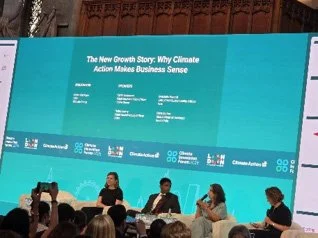
There was significant consensus that the energy transition is happening. Not fast enough, and not in the form of a deep transformation, as Nick Mabey emphasized in the climate politics meeting; but there were many references to the falling cost of solar, wind power and batteries, and to new technologies (e.g. airconditioners with built-in batteries to charge when prices are low). There were also many examples of innovative programmes, many at City level. Mayors (e.g. Miami, Limerick, Kranj) were especially keen to celebrate mass transit, district heat networks and solar roll out, greening programmes, sponge city projects, and green development gain (e.g. the Miami Resilience Trust Fund, funded by a levy on developers). A lot of the commercial stands, esp at the ReLondon event, were about measuring carbon and monitoring reductions. This, people argued, is the new growth story.
AI was celebrated everywhere, with many practical use cases. A good example was Lord Marvin Rees, former Mayor of Bristol, describing Civic Net Zero, an AI application which radically simplifies the process of cities processing data, identifying investment opportunities, matching cities with the right investors and even writing the contracts. It has a strong focus on data accuracy and transparency and is being used around the world. Brighton and Hove has just signed up. Sunderland is a pioneer in digital planning, and also uses AI radically to improve processes (apparently, they don’t ‘collect’ data, but ‘ingest’ it!). Glasgow is another example. The EU is pushing digital twins for cities. Someone working on scope 3 footprinting for a large retailer said there is huge potential in using AI to manage basic data acquisition and processing. There were many other examples, with people arguing that the energy and water cost of data processing centres will greatly be exceeded by the benefits. The usual caveats apply, of course, but the enthusiasm and practical experience across sectors was remarkable.
Electrification will be the focus
Lord Adair Turner (who chairs the Energy Transitions Commission) spoke at the innovation forum about the fact that the priority now was not to worry about decarbonizing the grid, but rather to speed electrification of the economy, including transport and home heating. The UK Net Zero power by 2030 plan should no longer be the priority. Upgrading the grid is essential for electrification, though one presentation made the case that the Scotland-England transmission bottleneck is such that the best bet is local generation and storage.
An issue much discussed was the need to sort out the relative price of gas and electricity, both in the UK and in Europe (Dan Jorgensen, the European Energy Commissioner spoke about this).
All this provides a new context for international climate negotiations. One expert in the field said NDCs are no longer driving the climate negotiations, but that the electricity target is now the thing. 35 (%) by 35 is the new slogan.
Finance is available for the energy transition, but held back by regulation
In this area, the problem was not lack of finance. There were no calls for subsidies to infant industries. Climate action is no longer a mandate, someone said, but an opportunity. The main problems fingered in the innovation forum were over-regulation, delays in planning, and de-risking – to the point where some finance people said that renewable energy problems were simply not investible. The National Wealth Fund was praised for shifting from pure finance to guarantees. It would have been good to push some of this – to defend environmental regulation, for example, and ask whether companies would really be happy if e.g. subsidies for heat pumps were removed. The issues we have been debating wrt to the Brighton and Hove version of Bristol City Leap are also relevant: social benefit, the risks of PFI, contract management skills, the role of community energy . . .
But there are wider issues of governance, partnership and state action
Across all sessions there was a common governance challenge, regardless of geography or sector. There is no universal model, however. It was argued that rather than centrally designed solutions, successful transitions depend upon: local governance; local knowledge; local participation; and local ownership. Place-based approaches are key.
Purpose must be embedded in governance, not just values. Organisations which hold firm through difficulty (e.g. recessions, CEO changes and political backlash like ESG rollback in the US) are those with purpose built into operations and board decisions, not just mission statements.
Often, it was beneficial to think regionally. In the case of agrifoodsystems, for example, catchments provide a practical framework for understanding the interconnected relationship between ecosystems, communities, agriculture, infrastructure, and economic productivity, making them valuable with benefits beyond environmental outcomes alone. In the food area, pooling efforts from local authorities and organisations at "mass" scale attracts more investment/funding from the private sector. Local authorities should provide a vision framework that enables/de-risks business investment.
Partnership featured in many calls to action, mainly between Government, local authorities and the private sector, but also with communities, and in networks across the globe.
As an example, tackling urban food waste and embedding circular practices needs a mix of top-down enabling frameworks (vision, funding, regulation) and bottom-up behavioral/community interventions. There needed to be collaboration across councils, businesses, NGOs, and citizens, but current funding models (short-term, fragmented) are a barrier to scaling solutions for local authorities. Behavioural change has outsized impact– local authorities should invest funding into behaviour change programmes, which can create lasting impacts and long-term return on investment. In addition, boroughs sharing info on food collection and food reduction practices contribute to social norming. For businesses, small practical tools help, e.g. ReLondon offered a digital ordering tool letting customers customize kebabs (remove lettuce, tomato, etc.) to cut prep waste for hospitality businesses. And there are community models. ReLondon supported a pay-what-you-can café in East London using surplus food donated by local businesses, supermarkets, and charities led by Islington
Teresa Ribera from the EU called for partnership. Nick Mabey called for a reappraisal of partnerships, with some being retired: we need new coalitions to deliver transformation. A question: what would the criteria be?
In terms of state action, procurement came up a lot, for example in linking schools to local suppliers, but more generally as a way to drive transition at local (and national level). There were examples from Brazil, Sweden and Scotland, and other examples were cited by Kristin Strandberg in our own food meeting (Copenhagen, Ghent, Milan . . .).
There are new opportunities in the UK, driven by the 2023 Procurement Act, but also by new national security provisions. Sam Markey from Recurve talked about ‘agentic commerce’ and is launching a new Alliance for Purposive Procurement.
Does all this automatically imply a just transition? Of course not. Inclusion is not an afterthought.
If much of this sounds technocratic, there were repeated calls for just transition and putting people first. City mayors talked about prioritizing both mitigation and adaptation programmes which benefited disadvantaged and vulnerable communities. Skills featured quite a lot. A refrain was that climate interventions would work when they benefited people and were not seen as a burden.
There was a welcome focus in some sessions on power, priorities and practicalities. The impressive Youth Climate Collaborative team led a rich session on intergenerational leadership, emphasising the need for systemic change not tokenistic engagement. Examples shared included accommodation for young participants at Summits, mentoring, research and network building; and two international level policy commitments that can be leveraged. The Universal NDC Youth Clause adopted by 74 countries commits countries to collaborating with youth to realise ambitious climate action places; and The UN Pact for the Future signed by193 countries, described as a real win - chapter 4 on youth and future generations contains commitments to strengthening youth participation at national and international level. The Intergenerational Power-sharing Wheel launched at the session is described as a roadmap to creating an ideal intergenerational leadership model – it usefully combines ideas of power – different kinds from epistemic, financial, governance and decision maker.
Political engagement starts with better communication and individual action
Finally, there was quite a discussion of messaging, and a large number of sessions presenting models of behaviour change. Several politicians said that you couldn’t campaign on climate change, but had to focus on specifics: heat, flooding, comfortable homes, jobs etc . . . Several mayors made this point. One specialist speaker in this field argued that ‘people can handle the truth’ and that the priority is consistent, long-term policy. So not quite a consistent message.
One discussion centred on informality. Rather than replacing informal systems, speakers suggested policy should recognise: informal markets; informal food traders; informal planners; informal innovation; informal agricultural knowledge. Informality often represents resilience rather than weakness.
Personal action was seen as important. A panel webinar exploring why climate progress remains too slow despite the existence of strategies and commitments, explored the argument that courage, not necessarily knowledge, is the consistent missing link. Courage emerges when the right conditions align: it is personal, but cannot be solo. Conditions that build courage include: knowing your why, trusting your instincts, surrounding yourself with the right people, accepting the potential and real cost of failure, being vulnerable and resilient, and acting with transparency and values.
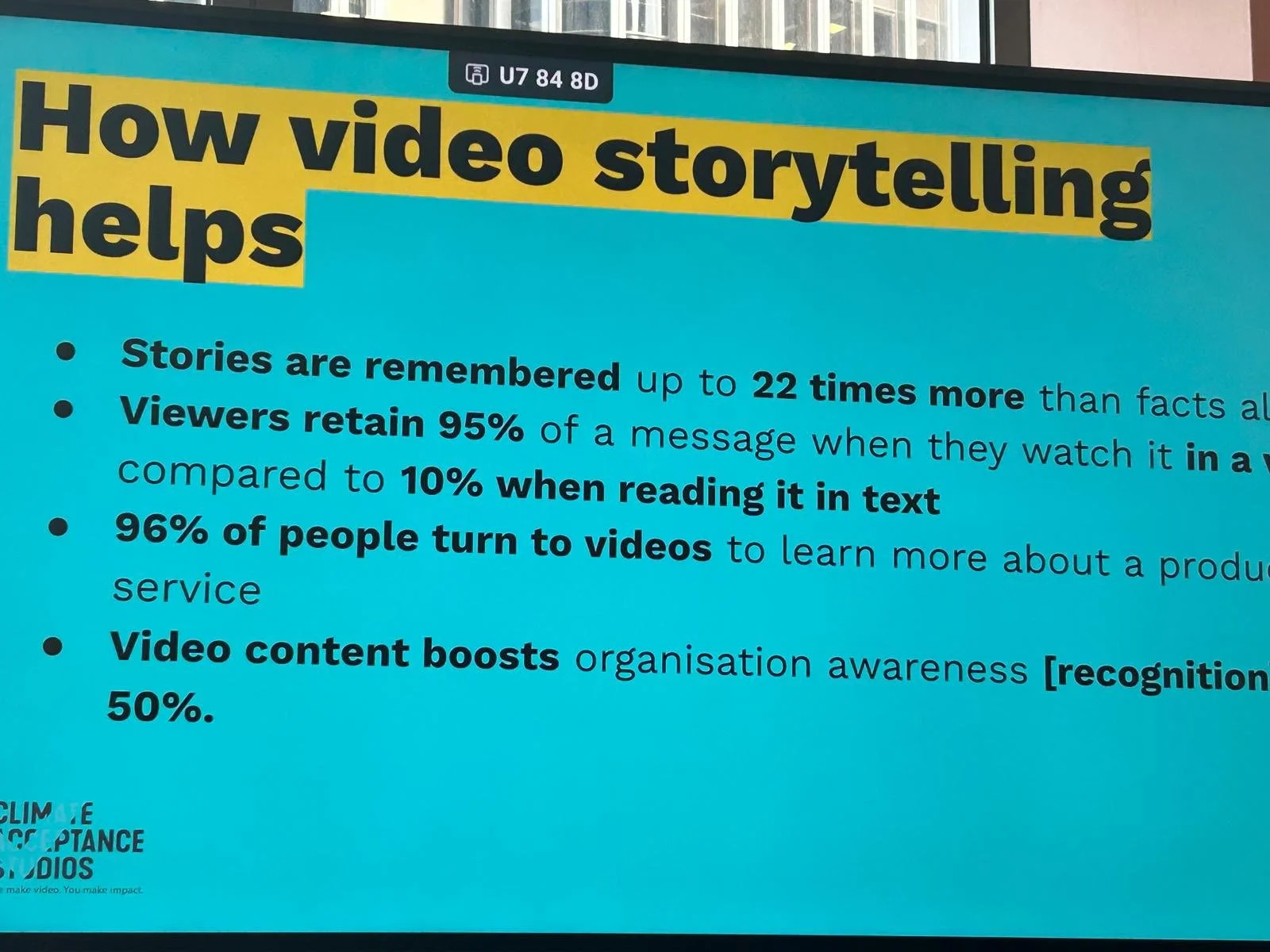
Small, low-cost, high-transparency acts count and compound: a TikTok creator holding supermarkets to account with a phone camera, a sports charity doing water quality testing on the Thames (showing courage doesn't always look heroic or well-resourced). These build track records and grant eligibility over time. In this context, video is underused in the climate sector. Graphs do not inspire! With support, amazing things can be done with mobile phones.
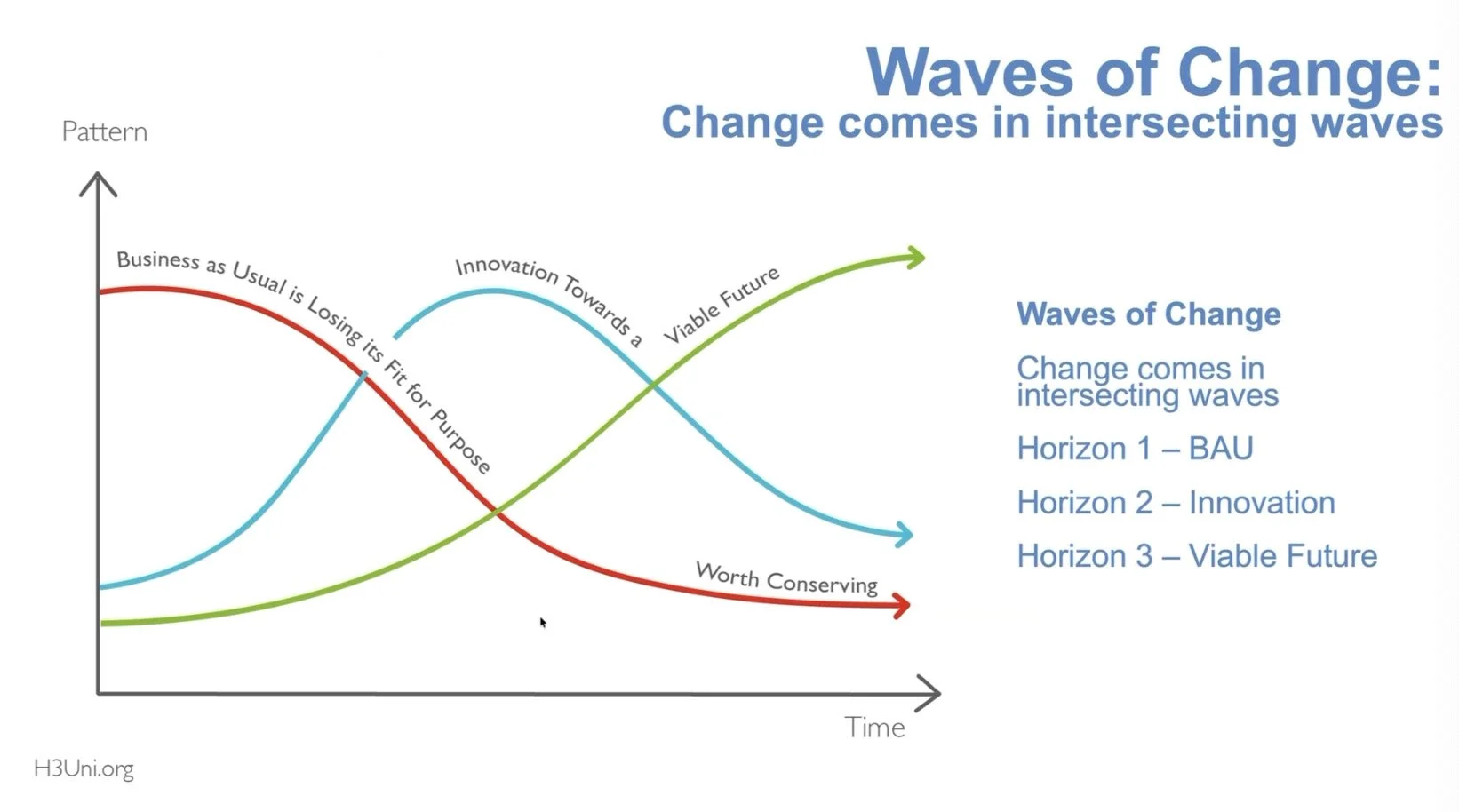
A practical workshop explored how small individual actions spark culture shifts that accelerate sustainability and climate transformation. Change champions are appointed by management (top-down, often resisted); change agents are people who genuinely want to be there and act from intrinsic motivation. The priority then is to shift from top-down hierarchy to a network model — connections not determined by seniority but by who cares and who can act, and with networks allowing small projects to link together and grow without needing central permission. Here, communities of practice: help people meet, develop trust, share knowledge. Protect those not ready to go public as safety enables growth. Clusters support each other and operate better than individuals alone. Change builds in waves.
But individual action also needs to be complemented by directed systems change. An example. What we eat is a climate decision and it’s time menus said so. Providing information on menus was both a challenge and an opportunity. HC Vinayaka from ITC hotels in India spoke very knowledgeably about the technical problems of making an accurate carbon footprint for menu items. Sometimes there are over 100 ingredients on a menu and scoring them and integrating them all accurately is difficult. He did recognise, however, that if a restaurant can tell you the calories in a dish they should be able to give you an estimate of the carbon footprint too. One problem is how much you are going to be held to that estimate.
Implications for Brighton and Hove
It is tempting to produce a long list of things Brighton and Hove could manage if only it had more money: in adaptation, mitigation and economic transformation. There were many references, however, to budget constraints facing Councils. The Barnet ‘Graph of Doom’ was noted, a projection from the early 2010s, showing that local authority budgets would soon be eaten up entirely by statutory spending on adult social care and children’s services. That is now seen as ‘prophetic’.
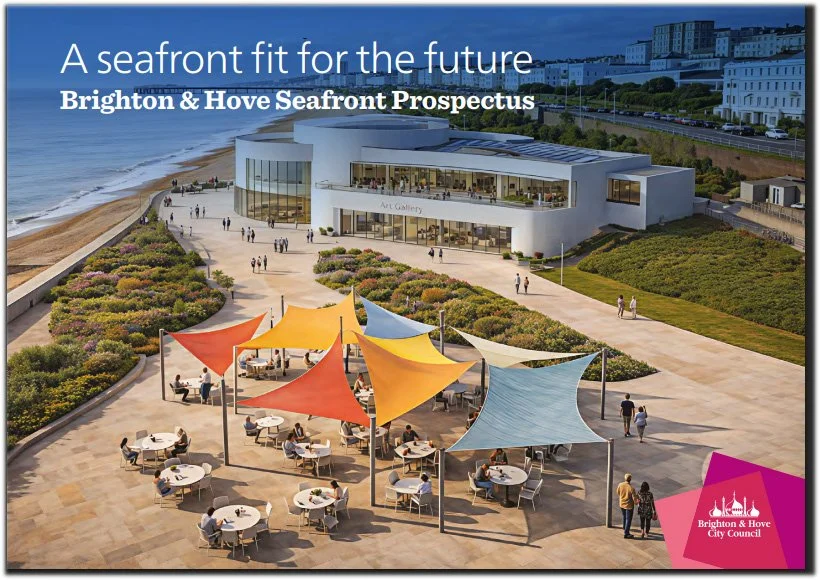
Still, there are some options. BHCC is already exploring ways to bring in private finance in its proposed energy partnership, and in its proposals for improvements to the sea front. To note, however: contracts need to be written and managed really carefully if social benefit is to be realised. There is also potential for the taxation of development gain on publicly-owned land, as in Miami, and as also used in Copenhagen. Could there be mileage in the idea of ‘heat polluter pays’? Can regulation be used, for example wrt procurement of school meals?
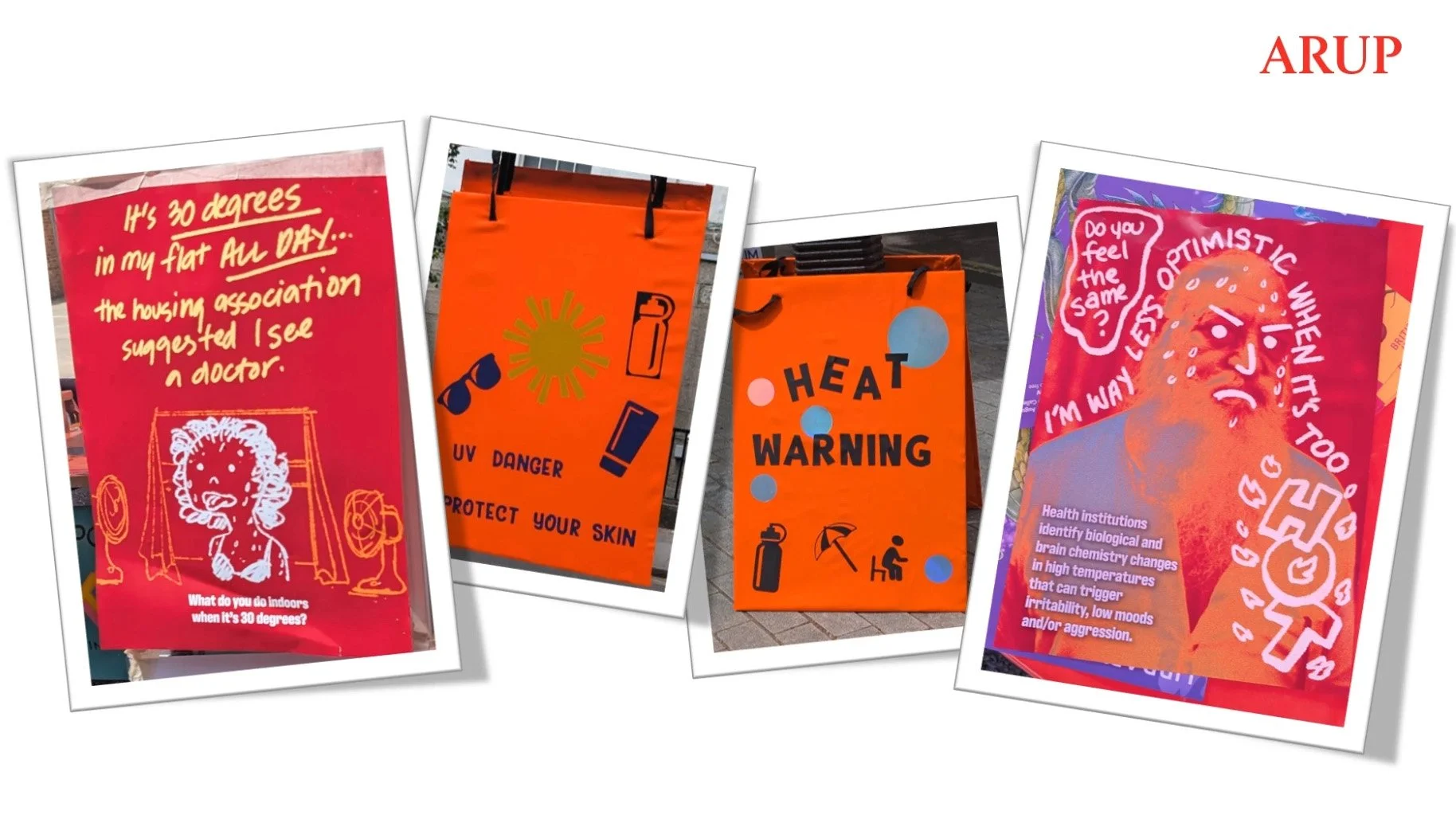
Public participation is key to securing socially inclusive outcomes. Again, Brighton and Hove is accumulating experience in this field, not least via the Climate for Communities programme managed by the Trust for Developing Communities. There were interesting examples from other places, for example a local museum in King’s Cross hosting poster art and story-telling exhbitions on the theme of heat, or a heatwave photo exhibition in Bristol.
Public action is central, but individual behaviour change must also be celebrated. There was useful learning for the City in the sessions on networking change agents, to build leadership over time. The City’s work with schools is exemplary in this regard. Sport could be another way in.
Partnership was another useful theme. Brighton and Hove has a committed business sector, for example in the hospitality sector and via its large number of B-Corps. But partnership doesn’t just happen. The example of community energy contributing to the City’s decarbonisation programme is relevant: they need to be genuine partners, not contractors.
A final plea (from Simon): where are the commercial sponsors that would enable us to replicate in Brighton and Hove the kind of events that happen in London? We know who you are, and would like to talk to you!
___________
This summary was prepared by Simon Maxwell, co-Chair of Climate:Change.
Perspective pieces are the responsibility of the authors, and do not commit Climate:Change in any way. Comments are welcome.